
Background
On June 25, 2024, the US surgeon general declared firearm violence a public health crisis and called for health care interventions to reduce death by firearms through screening for access to guns, vulnerability to violence, or depression and risk of suicide. Injury by firearm, including unintentional injury, suicide, and homicide, is the current leading cause of death for children and adolescents in the US.1 Unintentional firearm injuries are associated with children of younger age, whereas homicide by firearms is the leading cause of death for younger adults aged 15 to 34 years.2 Additionally, suicide is responsible for between one-half to two-thirds of firearm deaths, and firearms are associated with the highest rate of mortality of all suicide attempts.3,4 The elderly population is particularly at high risk for death by firearm in suicide, as 70% of suicides among individuals 65 years and older are via firearms.4
The surgeon general’s declaration that firearm violence is a matter of public health elevates the urgency to find solutions to firearm violence; however, this is not a novel idea or statement. Since the 1980s, the American Medical Association (AMA) has supported legislative policies that reduce firearm access, such as a waiting period and background check prior to purchase.5 The AMA then made a statement that gun violence was a public health crisis in June 2016 after the Orlando nightclub shooting, continuing its lobbying efforts.6 In February 2019, 44 major medical organizations joined the AMA, including the Association of American Medical Colleges (AAMC), American College of Surgeons, American Academy of Pediatrics, and American Psychiatric Association, to identify shared goals on this issue. Their consensus statement noted that firearm violence is a health care crisis, health care professionals should counsel patients on firearm safety and storage, and further educational and research efforts should be supported and funded.7 Another advisory group composed of physicians and educators in the field of firearm prevention came together after this summit to develop specific priority recommendations, one of which included developing screening for firearm injury and risk and incorporating appropriate interventions and counseling when a patient is at risk for firearm injury.8 Priority for screening and counseling should be directed at persons deemed to be at high risk of injury, such as when intimate or peer violence is suspected or a person identifies suicidal ideation.8
However, despite these recommendations, screening for firearms in high-risk patients remains low. In a retrospective medical record review of pediatric patients presenting to the emergency department with suicidal ideation, homicidal ideation, or suicide attempt between January and December 2016, only 5.1% (5 of 98 patients) were screened by pediatric resident physicians for access to firearms.9 Screening and counseling rates have been low for many years across specialties and clinic settings; multiple observational studies from the late 1990s and early 2000s found outpatient screening for access to firearms to be 0% at both adult and pediatric primary care sites and anywhere from 0% to 3% in pediatric emergency department visits.10–13 Training in residency programs on firearm injury prevention parallels these low screening rates. A survey of pediatric residency program directors in 2021 found that 21% of the responding program directors offered official training in firearm injury prevention,14 which is only a slight increase from a 1997 study of family medicine residency programs in which 16% of programs offered training.15 For screening rates to increase, there must be increased training for emerging health professionals.
To date, the bulk of studies that have reported on training exercises and their effectiveness target resident physicians, and even then, these studies are scarce.16,17 Residents are in a unique position to receive training because certain hours of nonclinical education are required by most programs. At the same time, residents are often overworked and receive a constant influx of information. While being at an early stage of training lends itself to some pliability in practice, social cognitive theory tells us humans are “creatures of habit” and physicians are no different; residents have learned practice behaviors, developed in medical school, that may be difficult to break despite best efforts.18 As such, there is a need for training for firearm violence screening to begin at an earlier stage of medical education, such as medical school, before these habits have formed.
This scoping review summarizes the current interventions for firearm violence screening across medical education levels (medical students, resident physicians, and other health care professionals). More specifically, the following questions were examined: What is the current evidence-based approach to training on firearm injury and prevention within health care spaces? How might interventions aimed at medical student education promote longitudinal practice of firearm screening and therefore contribute to reducing overall morbidity and mortality from firearms?
Through the lens of a scoping review, we investigate the existing evidence-based research on firearm screening and firearm injury prevention counseling that are most effective for medical students. We provide recommendations for adapting current intervention to medical school curriculum and provide insight into how early adoption of best practices in screening for firearm violence and counseling promotes violence reduction.
Methods
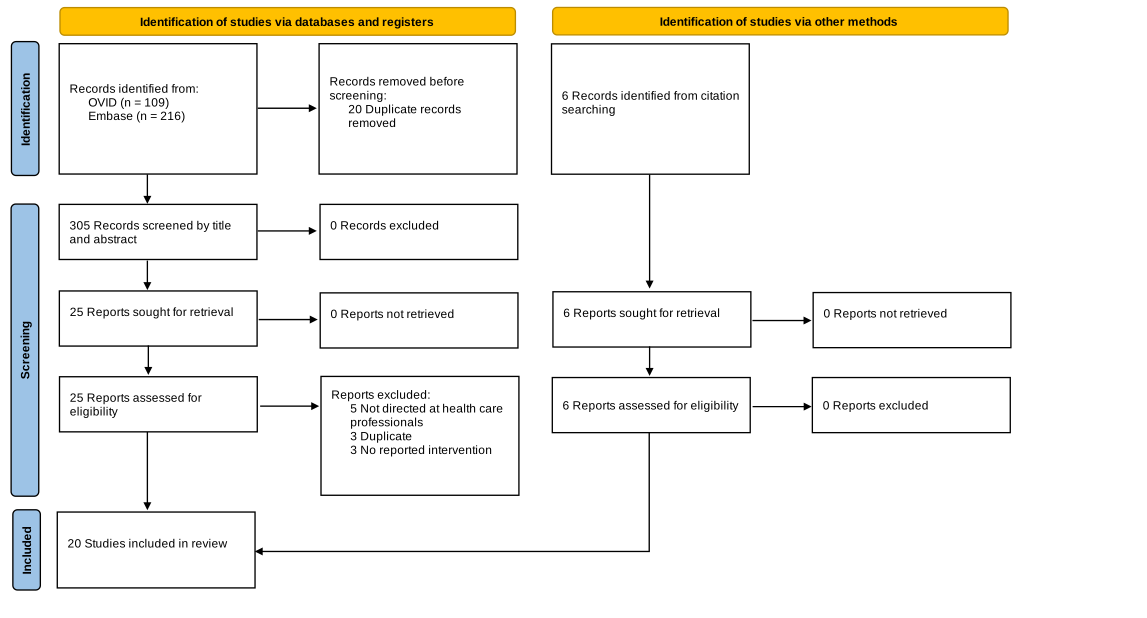
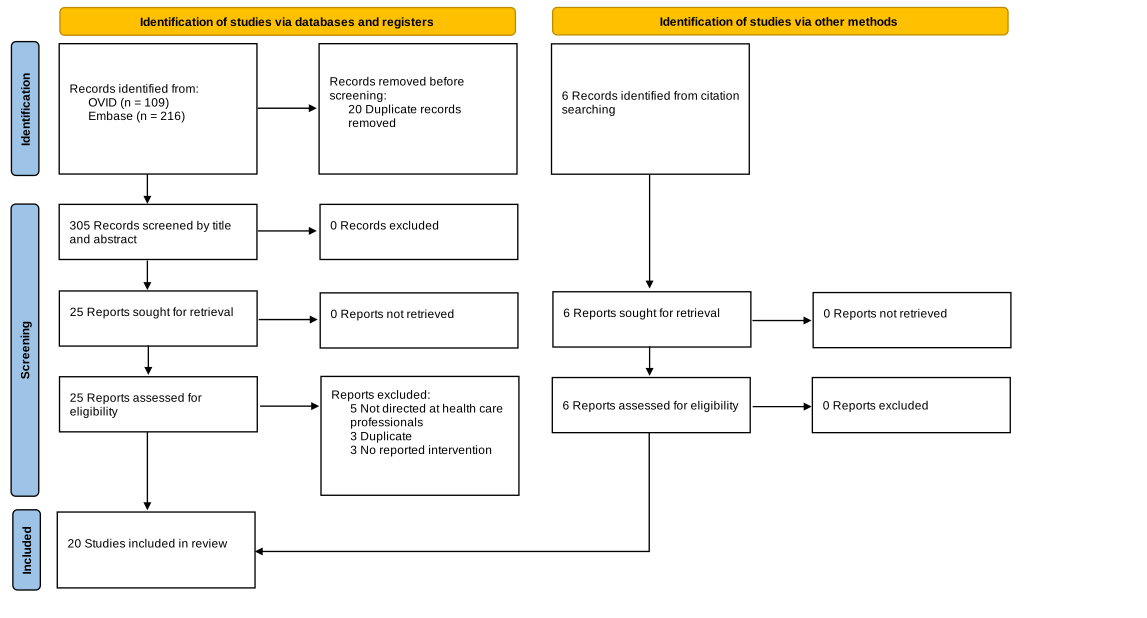
On February 5, 2025, a literature search was run on OVID Medline and Embase with the keywords ((education) OR (training)) AND (firearms) and (medicine). Using PRISMA-ScR guidelines, the resulting 244 articles were screened for eligibility based on title and abstract independently by the first 2 authors. Inclusion criteria included (1) presented original research; (2) intervention contained an element of training on firearm violence safety screening or counseling; (3) study participants were in the health care profession; and (4) published in English. Discrepancies between authors regarding the relevance of articles were resolved through discussion. At the end of this discussion, 11 articles that met the inclusion criteria via title or abstract were included for full-text review. An additional 9 articles were included from citation review that were not captured in the original search, totaling 20 articles included in our review. Figure 1 depicts the study selection process. Excel was used to capture the data from each article (eg study participants, description of the intervention, reported measurable outcomes, validated tools used during the intervention). The first author (M.B.) conducted the initial data extraction, which was then confirmed by the second author (J.D.).
Results
Of the 20 studies reviewed, 2 exclusively included medical students and 1 included medical students and resident physicians as participants. The majority of studies (n = 11) only included resident physicians as participants. The remaining 6 studies included clinicians across various specialties and levels as participants, including resident physicians, physicians, nurse practitioners, social workers, and psychologists.
Training Among Medical Students
Three studies were directly aimed at medical students and included didactic and clinical integration components.19–21 However, the studies differed in the length of the intervention, from 20 minutes (Kwong et al21) to 2 to 3 hours (Abraham et al19 and Kucirek et al20). All 3 studies included some lecture component, but the Kucirek et al20 study was the only one of all 20 articles to require prework, which included readings on public health theory and epidemiologic accounts and completion of the AMA’s online module “The Physician’s Role in Promoting Firearm Safety.”22 Both the Kucirek et al20 and Abraham et al19 studies included a role-play scenario with other study participants, whereas Kwong et al21 study introduced a clinical vignette for discussion. A summary of the intervention formats of these studies directed towards students is found in Table 1.
Training Among Resident Physicians and Other Clinicians
The majority of studies delivered their content to resident physicians in some capacity, with some studies delivering content to other health professionals such as practicing physicians, social workers, and nurses. Of these 17 studies that directed their intervention to medical professionals rather than medical students, 13 of them were exclusively based in a pediatric setting, whether it be directed toward pediatric residents or practicing pediatric community clinicians.23–35 The remaining studies addressed health professionals across a variety of specialties and clinical backgrounds.36–39 Table 2 summarizes these studies.
In regard to intervention format and curriculum, the majority of studies delivered material developed by local educators, physicians, firearm professionals, law enforcement, and study authors.23–26,29–34,36 The remaining 6 studies integrated their own didactic curriculum with previously developed, publicly available curriculum and counseling tools.27,28,35,37–39 A summary of these tools is found in Table 3.
The format of these interventions varied widely, including in-person seminars, didactic sessions, and online modules. The components included in these interventions also varied, with the majority incorporating some form of lecture on topics such as firearm epidemiology, regional firearm laws, screening techniques, and the role a physician should play in firearm injury prevention (13 of 17).24,26–31,33–36,38,39 More half of the studies also included either a component of role-play, either with other study participants or with a standardized patient. A full summary of the intervention component statistics is found in Table 4.
Measurable Impacts on Efficacy of Firearm Injury Prevention and Screening
Reported outcomes varied across studies, from reported self-efficacy in abilities to counsel on firearm safety to documented screening of firearm access in patient medical record reviews. The 2 studies directed at medical students focused on outcomes related to student knowledge about and confidence in counseling on firearm safety. One year after content delivery, Kucirek et al21 found that 92% of participants strongly agreed or agreed on the importance of physician understanding of firearm violence (86 students out of 94, with 6 students lost to follow-up) and 78% of students reported increased confidence in their ability to counsel patients on firearm safety (73/94 students). Kwong et al21 found that at the 6-month mark post intervention, students reported a sustained increase in self-efficacy in screening for firearm injury prevention and risk factors since the intervention, but did not report sustained self-efficacy in providing advice and resources about firearms. Additionally, students who had received the intervention were not more likely than the control group to screen for firearm safety or storage in clinical practice. Finally, although the intervention group had received a gun safety lock to give to patients who identified an unlocked gun in the home, 78.6% of the intervention students did not give out the lock.21
Across studies directed at residents, practicing physicians, and other community providers, 12 of 17 found either an increase in self-reported or medical record–documented screening for gun access or counseling on firearm safety after the intervention.23,24,26–31,33,35–37 Changes in knowledge, attitudes, and self-confidence were also frequently studied and reported as increased either immediately after the intervention or in a follow-up study, although several studies found decreases in 1 or more of these measures after the 6-month mark.24,25,31,38,39
Discussion
In this scoping review, we evaluated studies that offered training to health care professionals on how to screen for and counsel on firearm injury prevention and safety.
The current literature on educational interventions is predominately aimed at resident physicians and health professionals in pediatrics. Given that firearm injury is the leading cause of death for children 18 years and younger, it is unsurprising that the public health–focused field of pediatrics has incorporated firearm violence screening into its training. However, the findings of this review highlight the need for training on firearm injury prevention across all specialties beyond pediatrics, as only 23.5% of interventions aimed at practicing medical physicians included participants outside of the field of pediatrics. Additionally, our findings highlight opportunity for longitudinal training at earlier time points of medical education. The AAMC joined the 2019 consensus guidelines that called firearm injury prevention education a priority. Although one study found that in 2019, 27% of participating AAMC medical schools reported content related to firearms in their curriculum, it comprised only 0.01% to 0.04% of the total curriculum.41 There is significant room for increasing training on firearm injury prevention in nonpediatric specialties and in medical education.
The findings from this study underscore a few important trends that support the integration of training on firearm safety in medical education. Despite a lack of validated tools used to train clinicians in gun violence screening and prevention, there is still a benefit to implementing some form of training on firearm safety and screening to health care professionals. Most studies identified an increase in at least 1 metric area as it pertains to gun screening or safety: increased reported knowledge on gun safety, reported self-efficacy on counseling techniques for gun safety, reported confidence in ability to screen or counsel patients at high risk of gun violence, or documented screening of firearm access and safety at patient visits. Educational theory in medical education suggests that self-efficacy influences the actions one takes and the persistence of the action in the face of barriers. This theory has proven to hold true in the systematic reviews and cross-sectional studies included, as clinicians with higher reported self-efficacy on firearm screening and counseling are more likely to screen for firearm injury and prevention.42–44 This suggests that measured clinical impacts are not requisite for the implementation of education on the topic; increase in self-efficacy and confidence may be sufficient for behavioral change. Additionally, this increase in knowledge and self-efficacy was seen across studies despite variations in delivery of educational curriculum, whether it be through in-person didactic, online training, or a combination of didactic and clinical simulation. Overall, medical education theory and subsequent studies have found that role-play increases learner confidence and therefore application to clinical practice. However, if an institution is limited in its ability to provide role-play simulation it should not be deterred from offering training altogether.43,45
Additionally, several of the reported studies saw increases in knowledge, self-efficacy, or screening rates immediately after the intervention that decreased after several months of follow-up.21,24,28,31 Studies also found that participants who had previous exposure to firearm safety training or exposure to firearms reported higher baseline comfort with screening and higher postintervention self-efficacy scores.38,39 Both findings emphasize the need for longitudinal and repeated training to sustain knowledge on and comfort level with discussing firearm injury prevention and safety. This is well-aligned with theories of spaced repetition and repeated stimulation for long-term memory potentiation.46,47 These educational theories form the basis of many medical school curricula, in which students are re-exposed to educational materials multiple times over multiple interval periods in order to retain information.48 By beginning training on this topic in medical school, students will have the opportunity for continued training throughout their education and hopefully develop long-term behavioral change.
Implications for Practice
This scoping review offers insight into how integration of training on firearm safety and screening at the medical school level aligns with health promotion and practice on a longitudinal scale. As discussed above, most interventions were implemented in pediatric settings. Pediatricians should continue their effort to increase firearm safety among young children, which is currently the largest cause of death in this patient population.1 However, gun violence is a topic that affects all clinicians, whether it be a patient experiencing suicidal ideation in a family medicine practice, or a patient with a gunshot wound presenting to the emergency department, or a psychiatric patient with homicidal ideation. Training needs to be available to all physicians regardless of specialty; however, individualized resident programs and variable schedules make such programming difficult. Reaching medical students, who have a more standardized curriculum, is an effective way of ensuring that all future physicians receive some baseline training in firearm injury prevention regardless of their eventual specialty.
Many studies also highlighted a common theme that participants prior to the intervention were unsure if physicians should participate in firearm counseling. However, after the intervention, the number of participants that felt physicians should have a role in firearm counseling increased.19,20 By integrating firearm injury lectures early in medical education, it cements the idea of firearms as a public health concern and reinforces the link between firearm violence and illness, disability, and death.7,8,14
Two studies used electronic health record (EHR) templates as part of their clinical integration, and both saw the most significant improvement in screening prevalence after the introduction of such a tool.27,33 This raises the argument for training in medical school for several reasons; first, medical students often use the resident-note template during a patient encounter. Students who are unfamiliar with firearm screening may skip the prompt, meaning that the patient does not receive screening.21,48,49 Second, the fact that behavioral change only occurred after EHR prompting and not didactic sessions ties back to the idea that residents already have established ways of practicing medicine despite being relatively early in training, which are difficult to break despite best efforts.50 Third, residents are also notoriously overworked and may not remember to screen patients for firearm access in time-sensitive situations; across many studies that evaluated barriers to screening and counseling for firearms, time was a consistent barrier to screening.29,48 On the other hand, medical students have a much lighter patient load and more time to spend on the patient interview. By training students how to appropriately screen for firearm access and injury, we can decrease resident workload and improve patient safety.
Finally, the foundations for integrating firearm counseling are already present in medical curriculum, as many of the counseling techniques (such as motivational interviewing and conflict resolution) used in these studies are already cornerstones of medical school curriculum and have been demonstrated to be efficacious.51 This allows for seamless integration of a new topic using existing principles of curricula without the need to develop completely novel methodology.
Limitations
Limitations of this study include the nature of a scoping review; in that it was not a systematic review, and thus individual studies were not evaluated for quality or presence of bias. Additionally, a scoping review does not hold the same rigorous data collection and analysis as systematic reviews and thus a meta-analysis of the quantitative findings was not completed.
Implications for Research
More evidence-based, longitudinal research is needed on the effectiveness of interventions directed to medical students. The current bulk of the literature investigates interventions aimed at pediatric residents; however, medical students will need a generalizable curriculum available to either any clinical scenario or to a specific clinical rotation, with takeaways applicable for any future specialty. While there were a few studies directed at medical students included in our review, they varied significantly in terms of length and content delivered, limiting the generalizability of the reported results.19–21
Additionally, more research is needed to develop validated tools for screening for firearm access and injury risk. While several tools are currently available and highlighted in this review, their use is minimal, and their efficacy has not been proven in large-scale clinical settings or systematic reviews. Like other screening tools for other public health concerns and social determinants of health, (Alcohol Use Disorders Identification Test–Concise for alcohol, Hunger Vital Sign for food insecurity, or Patient Health Questionnaire–9 for depression), a screening tool developed for firearm injury risk assessment and prevention should be simple, nonjudgmental, and point clinicians to an appropriate next step to help the patient.52
Conclusions
Firearm injury is a public health crisis, as declared by most governing bodies in medical education and the US surgeon general. Despite calls by the AAMC for teaching about gun violence and prevention in medical schools, there is scarce literature available on effective interventions at the medical school level.7,41 While current literature highlights interventions most aimed at residents, this too is limited in scope and directly predominantly at pediatric residents. Medical schools should implement curricula that address firearm injury risk assessment, screening for firearms, firearm safety, and counseling on firearm access and risk to address this public health crisis and promote longitudinal incorporation of firearm injury prevention into clinical practice.
Funding and Acknowledgment of Agency Support
No funding received.
Disclosure Statement
Nothing to disclose.
Ethical Approval
N/A
Corresponding Author:
Mckenna Brownell, mb2560@georgetown.edu, Georgetown University School of Medicine, 3900 Reservoir Road NW, Washington DC 20007