Loading [Contrib]/a11y/accessibility-menu.js
1.
Katoch A, Roney P, Plankey M. The Association between Polypharmacy and Depression among Middle-aged and Aging Men Living with HIV or without HIV. Georgetown Medical Review. 2026;10(1):62-84. doi:10.52504/001c.162851
Download all (2)
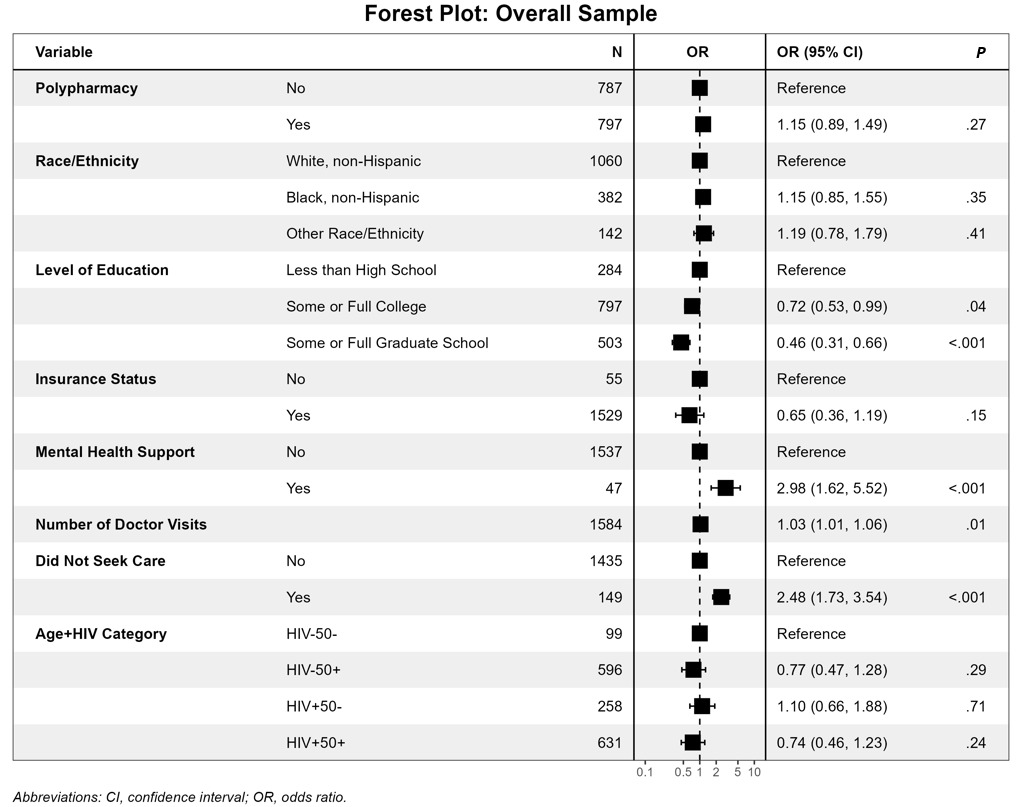
  • Figure 1. Multivariable model forest plot for overall sample
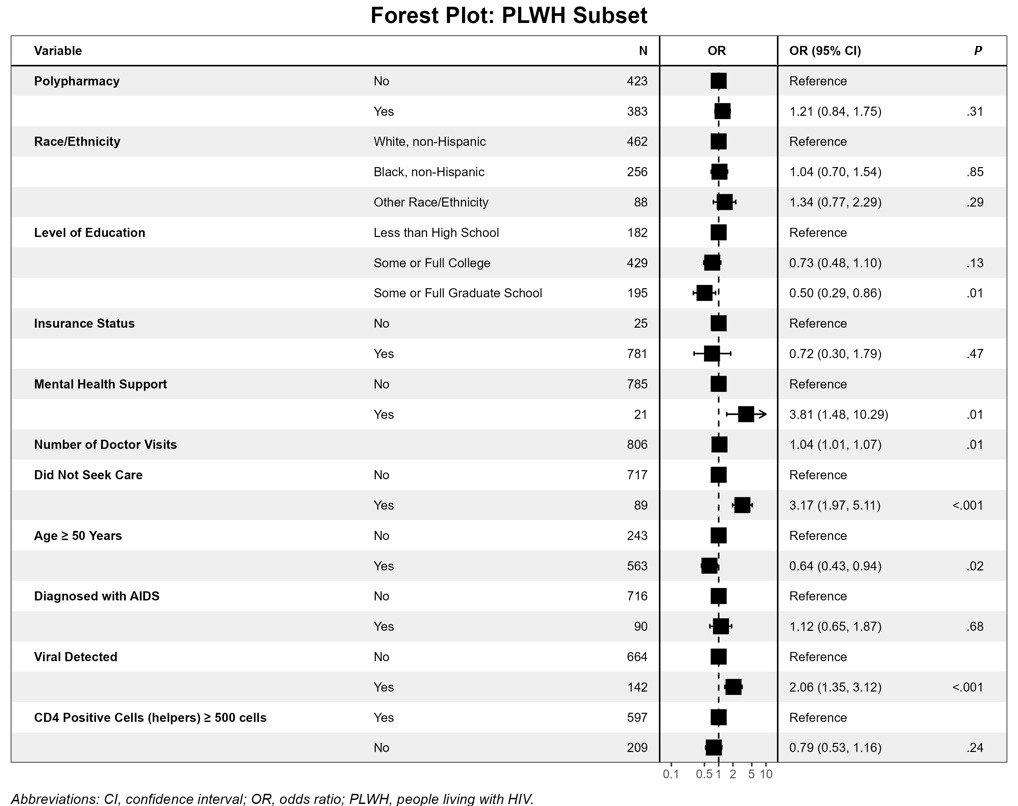
  • Figure 2. Multivariable model forest plot for PLWH subset

Abstract

Introduction

Polypharmacy, defined as the regular use of 5 or more medications at the same time, is common in older adults. It has been linked to negative mental health outcomes such as dementia, depression, and death. While polypharmacy and depression are prevalent among sexual minority men living with or without HIV, it is unclear if HIV status moderates the association between polypharmacy and depression. This study aims to investigate whether polypharmacy increases the odds of depressive symptoms in people living with vs without HIV among middle-aged and aging participants of the Multicenter AIDS Cohort Study (MACS).

Methods

This study used cross-sectional data from 2236 sexual minority men in a sub-study titled “Understanding Healthy Aging Among Men Who Have Sex With Men” conducted in MACS participants. Depressive symptoms were assessed using the Center for Epidemiologic Studies Depression Scale (CES-D). In accordance with the Centers for Disease Control and Prevention, polypharmacy was defined as the use of 5 or more non-HIV medications taken since their last visit. Multivariable logistic regression models were used to estimate the association between polypharmacy and depression of (1) the entire sample of men and (2) among only the men living with HIV, adjusting for race and ethnicity, education, insurance status, and the number of health care visits.

Results

Although not statistically significant, polypharmacy use was associated with having depressive symptoms (OR, 1.15; 95% CI, 0.89-1.49, P=.27) among men living with or without HIV. Additionally, among people living with HIV and the overall sample, non-Hispanic Black participants had increased odds of having depressive symptoms (PLWH: OR, 1.04; 95% CI, 0.70-1.54, P=.86; overall: OR, 1.15; 95% CI, 0.85-1.55, P=.35). Having had some or full graduate school was statistically significantly associated with decreased odds of having depressive symptoms in people living with HIV and the overall sample (OR, 0.50; 95% CI, 0.29-0.86, P=.01; overall: OR, 0.46; 95% CI, 0.31-0.66, P<.001).

Conclusions

Our findings underscore the need for integrated care that combines mental health screening with medication review, particularly for aging men with HIV or without HIV who are managing multiple chronic conditions.

Introduction

Polypharmacy is a common phenomenon affecting middle-aged and aging populations at unprecedented rates. Though polypharmacy has different definitions, it is most commonly defined as the concurrent use of 5 or more clinically indicated medications, with excessive polypharmacy being defined as the use of 10 or more medications.1–7 It is thought to be prevalent in older populations due to comorbidities attributed to multiple organ systems.6 Among people living with HIV (PLWH), the prevalence of polypharmacy ranges from 23% to 39%, which is higher than in people living without HIV (PLWOH).4 Polypharmacy is also shown to increase the chances of detrimental drug-drug interactions and drug adverse effects, and can increase the likelihood of poor adherence to medication regimens.1,8 Polypharmacy has also been shown to be a risk factor for other preventable health outcomes such as cognitive decline, hospitalizations, and mortality. It can lead to poor mental health outcomes such as dementia and depression.1,3

Depression is a mood disorder affecting 280 million people worldwide and can alter the mental, physical, and emotional aspects of an individual’s life.9,10 It is a common problem in older adults, though not considered a normal component of aging.10 Scales such as the Center for Epidemiologic Studies Depression Scale (CES-D), Patient Health Questionnaire-9 (PHQ-9), and Geriatric Depression Scale (GDS) can help diagnose and classify symptoms of depression in older adults and those with HIV.11 Depression is also associated with increased risks of functional disability, dementia, mortality, cardiovascular events, and use of health services.3,5 In older adults, it can reduce quality of life and complicate preexisting chronic conditions.11 Depression is estimated to be 2 to 3 times higher among PLWH (22%-45%) than PLWOH (3%-17%).9 In patients with HIV, depression can affect treatment adherence, social engagements, and quality of life and can also impact life expectancy.12 One study additionally noted that in developing countries, depression can be associated with an increased risk of disease progression in HIV clinical stage III or IV, regardless of sociodemographic factors, psychosocial support, or health condition.13,14

Polypharmacy may be associated with depression due to increased medication burden and reduced adherence, both of which have negative health outcomes.1,3,8 A meta-analysis of 19 studies found that individuals, particularly older adults, taking multiple medications were at increased risk of experiencing depressive symptoms.3

This study uses cross-sectional data from a sub-study, titled “Understanding Healthy Aging Among Men Who Have Sex With Men” conducted in the Multicenter AIDS Cohort Study (MACS), an ongoing observational cohort study of middle-aged and aging men living with or without HIV in the United States. HIV-positive men have been shown to take a median of 13 medications, including medications for HIV, and display increased depression symptoms.4,15 In this study, non-HIV medications also were examined in order to more accurately capture the burden of medications used to manage comorbid conditions.4 There is a paucity of evidence on whether HIV status moderates the relationship between polypharmacy and depression. This study aims to investigate whether the association of polypharmacy increases the odds of depressive symptoms in PLWH vs PLWOH.

Methods

Study Population

The MACS is a prospective cohort study of the natural and treated history of HIV/AIDS among men who have sex with men in 4 US sites: Baltimore/Washington, DC; Chicago; Los Angeles; and Pittsburgh/Columbus. Since its inception in 1984, a total of 6972 HIV-positive and HIV-negative men who have sex with men have been enrolled in the study over three time periods: 4954 in 1984-1985; 668 in 1987-1991; and 1350 in 2001-2003.16–18 MACS participants attend semiannual clinic visits that involve an Audio Computer-Assisted Self-Interview (ACASI) and a standardized clinical examination where medical history data and specimens are collected. The study design of the MACS has been described elsewhere.16–18 Detailed information regarding HIV and non-HIV medication use has been collected at every visit since the beginning of the study. An overview of the MACS is available online at https://www.niaid.nih.gov/research/multicenter-aids-cohort-study-public-data-set. Institutional review boards at each site approved the protocol, and informed consent was obtained from all study participants.

This analysis included the first visit of two consecutive visits that occurred between October 2014 to September 2015, resulting in a cohort of 2236 (1215 HIV-positive/1021 HIV-negative) men. Missing data were imputed using data from the alternate visit. It is standard practice to use data from follow-up visits and not from retrospective visits. Imputation was utilized since the likelihood that polypharmacy would change between visits is low, especially for those who have polypharmacy.

Outcome

Depression

Possible risk of clinical depression was assessed using the CES-D. The CES-D is a 20-item self-report questionnaire used to screen for depression and measure the frequency of depressive symptoms in the past week. It is widely used in both general population and clinical settings and includes items related to depressed mood, guilt, sleep and appetite disturbances, and a loss of interest. Responses are rated on a 4-point scale, and a total score from 0 to 60 is calculated, with higher scores indicating more severe depressive symptoms. A score of 16 or higher was used as a cut-off point to suggest a possible risk of clinical depression, as other articles suggest.19,20

Primary Predictor

Polypharmacy

Polypharmacy was defined using a dichotomous indicator (\(\geq\)5/<5) of five or more non-HIV medication classifications taken since the participant’s last visit. At each visit, a binary variable for medication classifications was used to classify whether the participant had used any medications in that classification since their last visit. Routinely used and as needed medications were treated similarly.

As part of routine data collection and processing during each semi-annual visit, data on self-reported non-HIV medications were collected, given a common drug code, and grouped into general drug classifications: cholesterol lowering, antihypertensive, diabetes drug, hepatitis C virus drug, hepatitis B virus drug, steroids, hormones, anticancer, antidepressants, tranquilizers, aspirin, antibiotics, and unclassified. For this analysis, additional drug classifications were created for drug codes that were originally labeled “unclassified” or did not belong to a classified group. These new classifications were antihistamine, appetite suppressant, antianginal, anticoagulants, antidiarrheal, antifungal, anti-ulcer, central nervous system stimulants, digestive/biliary, dopamine, herbal supplements, muscle relaxants, nonsteroidal anti-inflammatory drugs, opioids, substance abuse treatments, tuberculosis, and vitamins. Medications with very low prevalence were combined into an “other” medication category. There was a total of 30 medication classifications in our analysis. Non-HIV medications included prescription and nonprescription drugs and excluded recreational drug use.

Covariates

Sociodemographic Characteristics

Race/ethnicity at baseline was categorized as White non-Hispanic, Black non-Hispanic, and other. Age at each visit was calculated from the self-reported date of birth and date at visit and categorized as younger than 50 or older than or equal to 50 years. Enrollment was classified into early recruitment (1987-1991) and later recruitment (2001-current).

Comorbidities

Selected comorbidities were examined and included high blood pressure (systolic blood pressure ≥140 mm Hg or diastolic blood pressure ≥90 mm Hg), diabetes (fasting glucose ≥126 mM), liver disease (serum glutamic pyruvic transaminase or serum glutamic oxaloacetic transaminase >150 UL), kidney disease (estimated glomerular filtration rate <60 mL/min/1.73 m2 or urine protein-to-creatinine ratio ≥200), and dyslipidemia (total cholesterol ≥200 mg/dL or low density lipid ≥130 mg/dL or high density lipid <40 mg/dL or triglyceride ≥150 mg/dL).

Insurance Coverage

Health Insurance coverage was defined using self-reported responses to the question “Are you currently insured?” Participants responded with “Yes.”

HIV serostatus (positive/negative) was assessed using enzyme-linked immunosorbent assay with confirmatory Western blot on all MACS participants at their initial visit. If a participant tested HIV-negative at baseline, they continued to be tested at every subsequent visit to confirm they remained HIV-negative. HIV-positive participants included all men who were identified as such at baseline and those who seroconverted during study observation. CD4+ T-lymphocyte cell counts (cells/mm3, CD4) and plasma HIV RNA levels (viral load, copies/mL) were collected among participants with HIV. CD4 counts and HIV RNA viral load were dichotomized into <500 cells/mm3 and \(\geq\)500 cells/mm3 and detectable or undetectable (based on the lower detection level of the assay used at visit), respectively.

Statistical Analysis

Descriptive statistics were generated for the outcomes and covariates using frequencies and percentages for categorical variables and medians and interquartile ranges for continuous variables. Multivariable logistic regression models were used to estimate the association between polypharmacy and depression, adjusting for race and ethnicity, education, insurance status, and number of health care visits. The multivariable model for the overall sample included an age and HIV status combination variable, while the PLWH sample included the additional variables age, AIDS diagnosis, and viral load detected. Variables were selected from univariate analyses for candidate variables on the overall sample, while adjusting for age, race, education, and insurance. Variables with a P value less than or equal to .10 and those with importance based on the literature were included in the multivariable model. Odds ratios (ORs) and 95% confidence intervals (CIs) were reported. All analyses were performed using the statistical software R version 4.4.3, with libraries including ggplot2, gtsummary, and forestmodel.

Results

Participant Characteristics

In our sample (N=2236), 54.3% of participants (n=1215) were PLWH, and 45.7% (n=1021) were PLWOH. Among PLWH, 28% had depressive symptoms, compared with 24% of PLWOH, representing 26% overall. Polypharmacy use was listed in 42% of PLWH and 44% of PLWOH (43% overall). Overall, 74% of patients were older than 50 years (PLWH, 67%; PLWOH, 83%), with 62% identifying as non-Hispanic White and 80% having at least some college education. Most participants had insurance coverage (94%), had a median of 2 physician visits, and did not seek medical and/or dental care or prescription drugs (10%). The overall prevalence of hypertension, diabetes, and dyslipidemia were 57%, 15%, and 77%, respectively, with PLWH reporting 55%, 15%, and 79% and PLWOH reporting 59%, 14%, and 75%, respectively. Among PLWH, potent antiretroviral therapy was the dominant type of therapy used since last visit (90%), and participants had a median of 3 counts of nucleoside/nucleotide reverse transcriptase inhibitor, protease inhibitor, non-nucleoside reverse transcriptase inhibitor, enzyme inhibitor, and class II drug use. The majority of PLWH (73%) had CD4+ cells of 500 or more. Further details stratified by HIV status are given in Table 1.

Table 1.Demographic characteristics of cohort, median and IQR for continuous variables and percent frequency for categorical variables
Characteristic PLWH
(n=1215, 54.3%)
PLWOH
(n=1021, 45.7%)
Overall
(N=2236)
No. (%)
Age >50 Years 809 (67) 843 (83) 1652 (74)
HIV status and age >50 years
HIV- 50- 0 178 (17) 178 (8)
HIV- 50+ 0 843 (83) 843 (38)
HIV+ 50- 406 (33) 0 406 (18)
HIV+ 50+ 809 (67) 0 809 (36)
Race/ethnicity
White, non-Hispanic 647 (53) 737 (72) 1384 (62)
Black, non-Hispanic 354 (29) 193 (19) 547 (24)
Other race/ethnicity 214 (18) 91 (9) 305 (14)
Missing 0 0 0
Education at visit
Less than high school 299 (25) 145 (14) 444 (20)
Some or full college 645 (53) 495 (48) 1140 (51)
Some or full graduate school 271 (22) 381 (37) 652 (29)
Has insurance coverage for medications 1089 (95) 902 (93) 1991 (94)
Missing, No. 64 50 114
Have seen doctor concerning depression, anxiety, or mental health problem 36 (3) 37 (4) 73 (3)
Missing, No. 63 49 112
Number of doctor's office visits, OR (95% CI) 2.0 (1.0, 4.0) 2.0 (1.0, 4.0) 2.0 (1.0, 4.0)
Missing, No. 280 281 561
Did not seek medical and/or dental care or prescription drugs 131 (11) 82 (8) 213 (10)
Missing, No. 64 49 113
Diagnosed with AIDS 144 (12) 0 144 (6)
Viral detected (viral load >20) 213 (20) 0 213 (20)
Missing, No. 148 1016 1164
High blood pressure 520 (55) 527 (59) 1047 (57)
Missing, No. 276 124 400
Diabetes 128 (15) 116 (14) 244 (15)
Missing, No. 386 197 583
Liver disease 12 (1.3) 1 (0.1) 13 (0.7)
Missing, No. 312 144 456
Kidney disease 246 (27) 68 (8) 314 (18)
Missing, No. 314 152 466
Dyslipidemia 722 (79) 643 (75) 1365 (77)
Missing, No. 296 158 454
Type of therapy used since last visit
Combination therapy 38 (3) NA 38 (3)
Monotherapy 4 (0.3) NA 4 (0.3)
No therapy 72 (6) NA 72 (6)
Potent ART 1085 (90) NA 1,085 (90)
Missing, No. 16 1021 1037
CD4+ cells (helpers) >500 cells 778 (73) NA 1634 (82%)
Missing, No. 147 1021 253
Sum of the counts of NRTI, PI, NNRTI, EI, class II drug use (certain or uncertain use), OR (95% CI) 3.00 (3.00, 3.00) NA 3.00 (3.00, 3.00)
Missing, No. 198 1021 1219
Number of medications used, OR (95% CI) 4.0 (2.0, 6.0) 4.0 (2.0, 7.0) 4.0 (2.0, 6.0)
Missing, No. 3 8 11
Polypharmacy use
(>5 medications used)
510 (42) 450 (44) 960 (43)
CES-D score, OR (95% CI) 8 (2, 17) 6 (1, 15) 7 (2, 16)
Missing, No. 100 101 201
Depressive symptoms present (CES-D >16) 308 (28) 220 (24) 528 (26)
Missing, No. 100 101 201

Abbreviations: ART, antiretroviral therapy; CES-D, Center for Epidemiologic Studies Depression Scale; CI, confidence interval; EI, enzyme inhibitor; NRTI, nucleoside/nucleotide reverse transcriptase inhibitor; NNRTI, non-nucleoside reverse transcriptase inhibitor; OR, odds ratio; PI, protease inhibitor; PLWH, people living with HIV; PLWOH, people living without HIV.

Adjusted Associations of Polypharmacy and Depression

All multivariable variables were significant in the univariate analysis (P<.10) except for AIDS diagnosis, dyslipidemia, and number of comorbidities. AIDS diagnosis was included in the multivariable model due to its importance in the literature.

Albeit not statistically significant, polypharmacy use had a positive association with depressive symptoms (OR, 1.15; 95% CI, 0.89-1.49, P=.27) compared with those not using polypharmacy after adjusting for covariates (Table 2). In the PLWH subset, there was also a positive, not statistically significant, association (OR, 1.21; 95% CI, 0.84-1.75, P=.31).

Table 2.Univariate analysis for depressive symptoms outcome (CES-D >16), controlling for age and HIV status, race, education, and insurance*
Variable Overall
OR
(95% CI, P Value)
Polypharmacy use
No (reference)
Yes 1.41
(1.13-1.76, .002)
Have seen doctor concerning depression, anxiety, or mental health problem
No (reference)
Yes 3.61
(2.16-6.09, <.001)
Number of doctor's office visits (per unit increase) 1.04
(1.02-1.07, <.001)
Did not seek medical and/or dental care or prescription drugs
No (reference)
Yes 2.34
(1.72-3.17, <.001)
Number of comorbidities (per unit increased) 1.03
(0.92-1.15, .58)
Diagnosed with AIDS
No (reference)
Yes 1.22
(0.79-1.87, .36)
Dyslipidemia
No (reference)
Yes 0.89
(0.68-1.16, .37)
Viral detected (viral load >20)
No (reference)
Yes 2.05
(1.46-2.88, <.001)
CD4+ cells (helpers) >500 cells
Yes (reference)
No 1.03
(0.75-1.52, .33)

Abbreviations: CES-D, Center for Epidemiologic Studies Depression Scale; CI, confidence interval; OR, odds ratio.
*Viral detected and CD4 were assessed only for people living with HIV.

Regarding the overall sample, covariates associated with significant decreased odds of having depressive symptoms included having some or full graduate school compared with less than high school (OR, 0.46; 95% CI, 0.31-0.66, P<.001). Covariates associated with statistically significant increased odds of having depressive symptoms were seeing a doctor concerning depression, anxiety, or mental health problem (OR, 2.98; 95% CI, 1.62-5.52, P<.001), number of doctor’s office visits (OR, 1.03; 1.01-1.06, P=.006), and did not seek medical and/or dental care or prescription drugs (OR, 2.48; 95% CI, 1.73-3.54, P<.001). Variables with non–statistically significant decreased odds of having depressive symptoms included having insurance coverage (OR, 0.65; 95% CI, 0.36-1.19, P=.15) and being HIV+ 50+ compared with being HIV- 50- (OR, 0.74; 95% CI, 0.46-1.23, P=.24); variables with increased odds included being non-Hispanic Black compared with non-Hispanic White (OR, 1.15; 95% CI, 0.85-1.55, P=.35) (Figure 1).
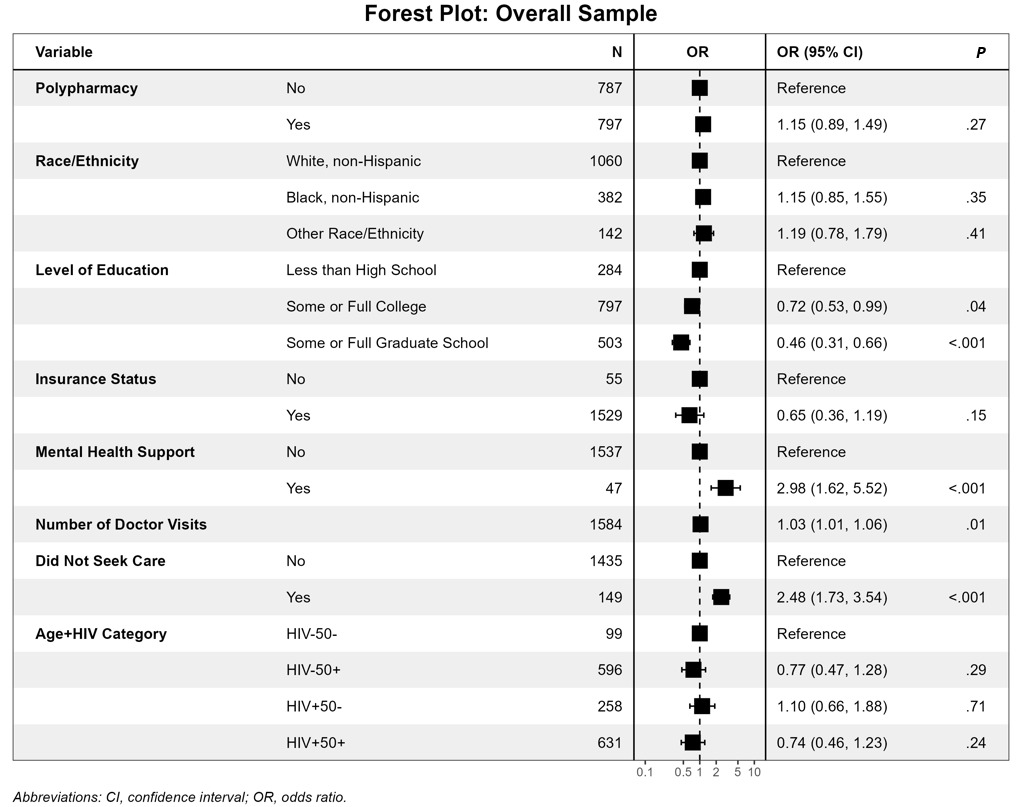
Figure 1
Figure 1.Multivariable model forest plot for overall sample

Among PLWH, a statistically significant increase in the odds of having depressive symptoms was associated with the variables seeing a doctor concerning depression, anxiety, or mental health problem (OR, 3.81; 95% CI, 1.48-10.29, P=.006), number of doctor’s office visits (OR, 1.04; 95% CI, 1.01-1.07, P=.01), not seeking medical and/or dental care or prescription drugs (OR, 3.17; 95% CI, 1.97-5.11, P<.001), and having viral load detected (OR, 2.06; 95% CI, 1.35-3.12, P=.001. Being non-Hispanic Black (OR, 1.04; 95% CI, 0.70-1.54, P=.86), and having an AIDS diagnosis (OR, 1.12; 95% CI, 0.65-1.87, P=.68) were non–statistically significantly associated with increased odds of having depressive symptoms. Statistically significant decreased odds of having depressive symptoms in PLWH were found in those who had some or full graduate school (OR, 0.50; 95% CI, 0.29-0.86, P=.01) and in those who were older than 50 years (OR, 0.64; 95% CI, 0.43-0.94, P=.02). Having less than 500 CD4+ cells (OR, 0.79; 95% CI, 0.53-1.16, P=.24) and having insurance coverage (OR, 0.72; 95% CI, 0.30-1.79, P=.47) were non–statistically significantly associated with decreased odds of having depressive symptoms (Figure 2).
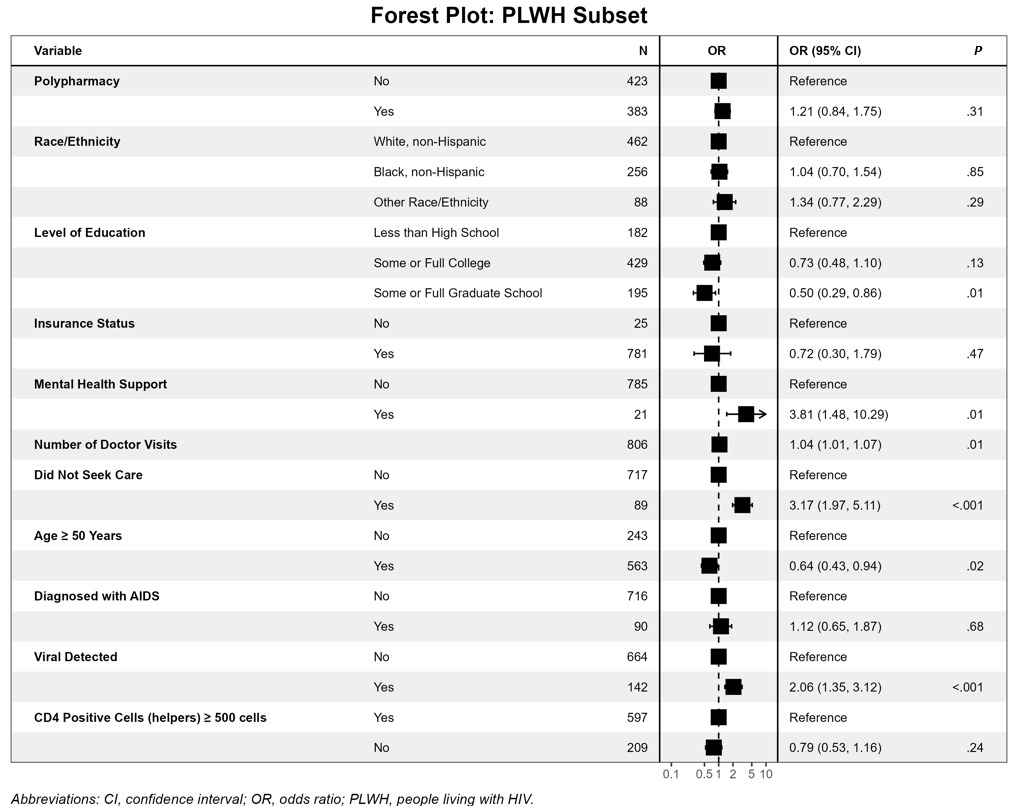
Figure 2
Figure 2.Multivariable model forest plot for PLWH subset

Discussion

In this study, among men living with or without HIV, polypharmacy was associated with having depressive symptoms; however, the association was not statistically significant. This finding was similar but also not statistically significant when examining only the men living with HIV.

A systematic review and meta-analysis by Palapinyo et al3 looked at 19 studies and found evidence that individuals taking more medications were at an increased risk of experiencing depression; however, this study did not look at people who were living with HIV.

Among all the men, the variables not being non-Hispanic White and being HIV positive and younger than 50 years were positively associated with having depressive symptoms. Although these associations were not statistically significant, they warrant further investigation. Identifying as a specific ethnicity helps explain the relationship between polypharmacy and depression, as research has found that ethnic minorities are less likely to initiate antidepressant treatment than non-Hispanic White patients, leading to a higher likelihood of having depressive symptoms.18 Furthermore, other studies have found that men living with HIV who are younger than 50 years were more likely to have depressive symptoms than those who were older than 50 years, most likely due to the various challenges associated with the younger age group, such as child rearing, financial hardships, domestic problems, or lack of support.21 Being HIV positive and older than 50 years compared with being HIV negative and younger than 50 years was negatively associated with having depressive symptoms. This finding did not explain the relationship between polypharmacy and depression, as older men with HIV tend to have more comorbidities and therefore may need more medications to treat their conditions.22 However, in some cohorts, older men with HIV may have higher levels of grit and individual-level psychosocial reliance factors, which may reduce their likelihood of depression.23 Additionally, polypharmacy in PLWH has been linked to poorer health outcomes and worsened quality of life, which may contribute to having more depressive symptoms.24

Regarding men living with HIV, those who were not virally suppressed and were immunosuppressed were more likely to have depressive symptoms. Men in the highest tertile of depressive symptoms have been found to have a higher risk of having an unsuppressed viral load, explaining the positive association between depressive symptoms and poor virologic control.25

For both groups (PLWH and PLWOH), those who regularly sought healthcare had increased odds of having depressive symptoms, whereas those with higher education, with insurance coverage, and older than 50 years had decreased odds of having depressive symptoms. Higher levels of education and having insurance coverage may explain the relationship between polypharmacy and depression, as these factors are often associated with higher levels of income, which can help mitigate mental health outcomes related to financial strain.26 Visiting a doctor concerning mental health concerns could explain the relationship between polypharmacy and depression, as polypharmacy is linked with higher healthcare utilization.27 Furthermore, not seeking medical care also could explain the relationship between polypharmacy and depression, as nonadherence to medication regimens and unmet needs are associated with worse mental health and higher psychological distress.28

A few limitations were present in this study. Participants in the MACS were conveniently recruited and may not represent all men living with or without HIV in the United States. No women were included in this study which further limits the generalizability of these results. Additionally, reporting bias may have been present in this study, such as social desirability bias, where participants may have underreported symptoms of depression or number of medications. Furthermore, reporting bias could have also affected the number and categories of medications that were self-reported. The usage of classification-based definitions of polypharmacy may have also oversimplified the true burden of managing multiple medications. Also, the inclusion of antidepressants in the polypharmacy count could impact the association between polypharmacy and depressive symptoms. Lastly, this was a cross-sectional study design and we were therefore unable to examine the temporality of the relationship between polypharmacy and depression.

Conclusion

This work highlights the need for setting mental health screenings as a pillar of care, especially in primary care settings. These mental health screenings should also include specific questions pertaining to medication review. Routine screening tools could help clinicians identify patients who could benefit from fewer medications and those who are at high risk for developing depressive symptoms. Asking about medications can improve patient autonomy and emotional well-being, especially among populations navigating the dual challenges of aging and chronic HIV management. Integrating these findings into clinical practice will require collaborative efforts among primary care providers, mental health providers, and HIV specialists to create protocols for routine medication review and depression screening during follow-up visits. Such protocols could be placed in electronic medical record systems in order to gauge patient satisfaction and compliance with their medication regimen. Interdisciplinary approaches to understand the depression-polypharmacy relationship can help clinicians move toward more equitable and holistic care for individuals with or without HIV.

Table 3.Multivariable logistic regression results for depressive symptoms present (CES-D >16)
Variable Overall (n=1584)
OR
(95% CI, P Value)
PLWH (n=807)
OR
(95% CI, P Value)
Polypharmacy use
(>5 medications used)
No (reference)
Yes 1.15
(0.89-1.49, .27)
1.21
(0.84-1.75, .31)
Race
White, non-Hispanic (reference)
Black, non-Hispanic 1.15
(0.85-1.55, .35)
1.04
(0.70-1.54, .86)
Other race/ethnicity 1.19
(0.78-1.79, .41)
1.34
(0.77-2.29, .29)
Education at visit
Less than high school (reference)
Some or full college 0.72
(0.53-0.99, .04)
0.73
(0.48-1.10, .13)
Some or full graduate school 0.46
(0.31-0.66, <.001)
0.50
(0.29-0.86, .01)
Has insurance coverage for medications
No (reference)
Yes 0.65
(0.36-1.19, .15)
0.72
(0.30-1.79, .47)
Have seen doctor concerning depression, anxiety, or mental health problem
No (reference)
Yes 2.98
(1.62-5.52, <.001)
3.81
(1.48-10.29, .006)
Number of doctor's office visits 1.03
(1.01-1.06, .006)
1.04
(1.01-1.07, .01)
Did not seek medical and/or dental care or prescription drugs
No (reference)
Yes 2.48
(1.73-3.54, <.001)
3.17
(1.97-5.11, <.001)
HIV status and age >50 years
HIV- 50- (reference)
HIV- 50+ 0.77
(0.47-1.28, .30)
HIV+ 50- 1.10
(0.66-1.88, .71)
HIV+ 50+ 0.74
(0.46-1.23, .24)
Age >50 years
No (reference)
Yes 0.64
(0.43-0.94, .02)
Diagnosed with AIDS
No (reference)
Yes 1.12
(0.65-1.87, .68)
Viral detected (viral load >20)
No (reference)
Yes 2.06
(1.35-3.12, <.001)
CD4+ cells (>500)
Yes (reference)
No 0.79
(0.53-1.16, .24)

Abbreviations: CES-D, Center for Epidemiologic Studies Depression Scale; CI, confidence interval; OR, odds ratio.


Acknowledgements

We are indebted to the participants of the Multicenter AIDS Cohort Study (MACS) Healthy Aging Study. We thank the staff at the 4 sites for implementation support and John Welty, Montserrat Tarrago, and Katherine McGowan for data support of this study.

Sources of Support

Multicenter AIDS Cohort Study (MACS) Healthy Aging Study, the staff at the 4 sites for implementation support and John Welty, Montserrat Tarrago, and Katherine McGowan for data support of this study.

The authors declare no conflict of interests.

Accepted: April 20, 2026 EDT

References

1.
Bazargan M, Smith J, Saqib M, Helmi H, Assari S. Associations between polypharmacy, self-rated health, and depression in African American older adults; mediators and moderators. Int J Environ Res Public Health. 2019;16(9):1574. doi:10.3390/​ijerph16091574. PMID:31064059
Google ScholarPubMed CentralPubMed
2.
Eyigor S, Kutsal YG, Toraman F, et al. Polypharmacy, physical and nutritional status, and depression in the elderly: do polypharmacy deserve some credits in these problems? Exp Aging Res. 2020;47(1):79-91. doi:10.1080/​0361073X.2020.1846949
Google Scholar
3.
Palapinyo S, Methaneethorn J, Leelakanok N. Association between polypharmacy and depression: a systematic review and meta-analysis. J Pharm Pract Res. 2021;51(4):280-299. doi:10.1002/​jppr.1749
Google Scholar
4.
Ware D, Palella FJ Jr, Chew KW, et al. Prevalence and trends of polypharmacy among HIV-positive and -negative men in the Multicenter AIDS Cohort Study from 2004 to 2016. PLoS One. 2018;13(9):e0203890. doi:10.1371/​journal.pone.0203890
Google Scholar
5.
do Nascimento KKF, Pereira KS, Firmo JOA, et al. Predictors of incidence of clinically significant depressive symptoms in the elderly: 10-year follow-up study of the Bambui cohort study of aging. Int J Geriatr Psychiatry. 2015;30(12):1171-1176. doi:10.1002/​gps.4271
Google Scholar
6.
Onder G, Liperoti R, Fialova D, et al. Polypharmacy in nursing home in Europe: results from the SHELTER study. J Gerontol A Biol Sci Med Sci. 2012;67(6):698-704. doi:10.1093/​gerona/​glr233
Google Scholar
7.
Wauters M, Elseviers M, Vaes B, et al. Polypharmacy in a Belgian cohort of community-dwelling oldest old (80+). Acta Clin Belgica. 2016;71(3):158-166. doi:10.1080/​17843286.2016.1148298
Google Scholar
8.
Antonelli Incalzi R, Corsonello A, Pedone C, Corica F, Carbonin P. Depression and drug utilization in an elderly population. Ther Clin Risk Manag. 2005;1(1):55-60. doi:10.2147/​tcrm.1.1.55.53603. PMID:18360544
Google ScholarPubMed CentralPubMed
9.
Falloc-Rojas VE, Jia DT, Gil-Zacarias M, et al. Risk factors for depression among middle-aged to older people living with HIV in Lima, Peru. J Int Assoc Provid AIDS Care. 2024;23. doi:10.1177/​23259582241273452
Google Scholar
10.
National Institute on Aging. Depression and Older Adults. U.S. Department of Health and Human Services. May 17, 2023. Accessed August 4, 2025. https:/​/​www.nia.nih.gov/​health/​mental-and-emotional-health/​depression-and-older-adults
11.
Froehlich W. Screening for depression in older adults: recommended instruments and considerations for community-based programs. Consultant360. 2009;17. https:/​/​www.consultant360.com/​articles/​screening-depression-older-adults-recommended-instruments-and-considerations-community
Google Scholar
12.
Yousuf A, Mohd Arifin SR, Musa R, Md Isa ML. Depression and HIV disease progression: a mini-review. Clin Pract Epidemiol Ment Health. 2019;15:153-159. doi:10.2174/​1745017901915010153
Google Scholar
13.
Memiah P, Shumba C, Etienne-mesubi M, et al. The effect of depressive symptoms and cd4 count on adherence to highly active antiretroviral therapy in sub-Saharan Africa. J Int Assoc Provid AIDS Care. 2014;13(4):346-352. doi:10.1177/​2325957413503368
Google Scholar
14.
Dianatinasab M, Fararouei M, Padehban V, et al. The effect of a 12-week combinational exercise program on CD4 count and mental health among HIV infected women: a randomized control trial. J Exerc Sci Fit. 2018;16(1):21-25. doi:10.1016/​j.jesf.2018.02.001
Google Scholar
15.
Okafor CN, Brennan-Ing M, Ware D, et al. Grit is associated with psychological health among older sexual minority men. Aging Ment Health. 2023;27(2):434-444. doi:10.1080/​13607863.2022.2032594
Google Scholar
16.
Farinpour R, Miller EN, Satz P, et al. Psychosocial risk factors of HIV morbidity and mortality: findings from the Multicenter AIDS Cohort Study (MACS). J Clin Exp Neuropsychol. 2003;25(5):654-670. doi:10.1076/​jcen.25.5.654.14577
Google Scholar
17.
Kaslow RA, Ostrow DG, Detels R, et al. The Multicenter AIDS Cohort Study: rationale, organization, and selected characteristics of the participants. Am J Epidemiol. 1987;126(2):310-318. doi:10.1093/​aje/​126.2.310
Google Scholar
18.
MACS/WIHS Combined Cohort Study. 2022. Accessed February 28, 2024. http:/​/​www.mwccs.org
19.
Lewinsohn PM, Seeley JR, Roberts RE, Allen NB. Center for Epidemiological Studies-Depression Scale (CES-D) as a screening instrument for depression among community-residing older adults. Psychol Aging. 1997;12:277-287. doi:10.1037/​0882-7974.12.2.277
Google Scholar
20.
Radloff LS. The CES-D scale: a self report depression scale for research in the general population. Appl Psychol Meas. 1997;1:385-401. doi:10.1177/​014662167700100306
Google Scholar
21.
Brown MJ, Serovich JM, Laschober TC, Kimberly JA. Disparities by age in depressive symptoms and substance use among men who have sex with men living with HIV. Int J STD AIDS. 2020;31(7):642-651. doi:10.1177/​0956462420918676
Google Scholar
22.
Kara E, İnkaya AÇ, Aydın Haklı D, Demirkan K, Ünal S. Polypharmacy and drug-related problems among people living with HIV/AIDS: a single-center experience. Turk J Med Sci. 2019;49(1):222-229. doi:10.3906/​sag-1807-295
Google Scholar
23.
Okafor CN, Ware D, Meanley S, Matthews DD, Cortina L, Gordon AR. Individual-level psychosocial resiliencies as mediators of the relationship between internalized homophobia and depressive symptoms among middle-aged and older men living with and without HIV. AIDS Behav. 2023;27(9):3171-3182. doi:10.1007/​s10461-023-04037-9
Google Scholar
24.
Okoli C, de Los Rios P, Taggart E, et al. Relationship between polypharmacy and quality of life among people living with HIV. AIDS Care. 2020;32(3):347-353. doi:10.1080/​09540121.2019.1675850
Google Scholar
25.
Regan M, Muhihi A, Nagu T, et al. Depression and viral suppression among adults living with HIV in Tanzania. AIDS Behav. 2021;25(10):3097-3105. doi:10.1007/​s10461-021-03187-y
Google Scholar
26.
Barrass L, Joshi E, Dawe J, et al. The association between socioeconomic position and depression or suicidal ideation in low- and middle-income countries in Southeast Asia: a systematic review and meta-analysis. BMC Public Health. 2024;24:3507. doi:10.1186/​s12889-024-20986-9
Google Scholar
27.
Doumat G, Daher D, Itani M, et al. The effect of polypharmacy on healthcare services utilization in older adults with comorbidities: a retrospective cohort study. BMC Prim Care. 2023;24(1):120. doi:10.1186/​s12875-023-02070-0
Google Scholar
28.
Kleinsinger F. The unmet challenge of medication nonadherence. Perm J. 2018;22:18-033. doi:10.7812/​TPP/​18-033
Google Scholar

Peer Reviews

Abstract

Major comments:

  • Lines 34-36: Simplify the study question to be more direct; consider: “While polypharmacy and depression are prevalent among sexual minority men, it is unclear if HIV status moderates the association between these two factors.”

  • Lines 35-36: End the sentence after “depression” and begin a new one with “Particular interest in the population of men living with/without…” to reduce sentence density.

  • Line 46: Clarify whether the sample of men versus men living with HIV (PLWH) are separate groups or if the analysis was conducted in two rounds.

Minor comments:

  • Line 1: Revise “even death” to more precise academic language.

  • Line 37: Use the “MACS” abbreviation the first time the study is mentioned in this line.

  • Lines 42-43: Explain the clinical significance of the 5+ non-HIV medication threshold and address whether the authors accounted for synergistic effects of HIV drugs with these medications.

  • Line 59: Remove the phrase “particularly for aging men with HIV or without HIV” and transition directly to “managing multiple chronic conditions.”

Introduction

Major comments:

  • Lines 64-75: Distinguish between “appropriate” polypharmacy and “problematic/inappropriate” polypharmacy, as this affects the interpretation of the study.

  • Lines 66-67: Distinguish between HIV-specific medications and non-HIV medications in the medication count and clarify the rationale for excluding HIV drugs early on.

  • Lines 73-75: Address how the study isolates the psychological effects of “taking many drugs” from the physiological burden of chronic illnesses.

  • Lines 91-92: Rewrite the sentence starting with “Polypharmacy has been investigated…” to remove repetition; use “with depression due to its mutual mechanism” and break into two sentences.

  • Lines 93-96: Combine or reorganize the sentences regarding the meta-analysis to avoid repeating the same conclusion.

  • Lines 101-104: Relocate the median medication count for HIV-positive men out of the introduction section.

  • General: Strengthen the transition regarding HIV as a moderator by explaining the mechanism (e.g., if HIV inflammation increases brain sensitivity to drug side effects).

Minor comments:

  • Lines 69-70: Replace “due to the co-occurrence …” with “Due to comorbidities often attributed to multiple …”.

  • Line 71: Change “39%, higher than” to “39% which is higher than …” and provide the prevalence figure for those without HIV.

  • Line 75: Reorganize the sentence regarding mortality into two sentences.

  • Lines78-81: Elaborate on how screening tools like the CES-D, PHQ-9, and GDS are integrated into a clinical assessment for diagnosis.

  • Line 79: Rephrase to “though not considered a normal component of aging.”

  • Lines 86-89: Explicitly state why data from developing countries is relevant to this U.S.-based cohort or focus more on the domestic landscape.

  • Lines 102-103: Summarize existing HIV-specific studies to highlight what has and has not yet been examined regarding this link.

Materials & Methods

Major comments:

  • Line 108: Emphasize the significance of the 30+ years of longitudinal data in the MACS database.

  • Line 117: Correct the broken questionnaire link; it currently redirects to unrelated text.

  • Lines 118-119: Relocate the sentence regarding Institutional Review Boards to a more appropriate section.

  • Line 120: Clarify if “first visits between two potential visits” refers to only the first visit or includes the second.

  • Line 121: Justify the decision to use future visits for imputation instead of past visits and address potential healthy-user bias.

  • Lines 121-122: Delineate exactly which variables were imputed, the rationale, and how this affected the interpretation of results.

  • Lines 136-137: Move the polypharmacy definition to the first sentence of the section.

  • Line 140: Address whether “pooling” medications into classifications (e.g., three different blood pressure meds counting as one classification) underestimates the true medication burden.

  • Lines 151-152: Stratify the analysis by race/ethnicity to include more diverse groups if possible.

Minor comments:

  • Lines 115-116: Provide a very brief description of the MACS design or omit the mention.

  • Line 116: Elaborate on the specific types of medication information collected.

  • Line 122: Rewrite the imputation description to be clearer (e.g., “If the visit was missing, the value input would be…”).

  • Lines 128-129: Move the list of items included in the questionnaire to the earlier sentence on Line 127.

  • Lines 130-131: Provide the clinical rationale for using a score of 16 as the cutoff.

  • Lines 143-144: Explain why certain medications were originally categorized as “unclassified.”

  • Line 149: Clarify the status and inclusion of herbal supplements.

  • Lines 151-164: Ensure consistent font alignment with the rest of the manuscript.

  • Lines 163-164: Re-evaluate the relevance and placement of the comorbidity details.

  • Line 167: Clarify the phrasing: “and at every visit for men at the last visit were HIV-negative.”

  • Line 181: Delete the phrase “for the multivariable model” to improve flow.

  • General: Attribute credit to specific R packages used in the analysis within the references.

Results

Major comments:

  • Lines 179-181: Clarify if antidepressants were excluded from the polypharmacy count; including them to predict depression scores may skew results.

  • Lines 188-189: Rephrase the percentages (PLWH, PLWOH) to clearly show how they arrive at the overall average.

  • Lines 201-203: Rewrite for clarity: “Except for AIDS diagnosis, the other multivariable candidates showed significance in …”.

  • Lines 206-208: Refrain from describing nonsignificant trends as “associations,” as the 95% includes 1.

  • Lines 210-218: Revise the wording to strictly parse between statistically significant and nonsignificant findings.

  • Table 1: Clarify in the text how missing values (e.g., for doctor visits) were handled in multivariable models (e.g., complete case analysis).

  • Table 2: Include a column for the adjusted odds ratio so readers can see the effect of polypharmacy after controlling for education.

Minor comments:

  • Lines 189-229: Organize results more clearly to address the central question; the section currently gives excessive attention to secondary covariates while the primary polypharmacy finding is too brief.

  • Line 203: Explicitly define what is meant by “all multivariable candidate variables.”

  • Lines 215-216: Justify the inclusion of “seeking care for mental health” as a covariate, as this may create a tautology or mask the effects of polypharmacy.

  • Lines 217-222: Reorganize topics to create smoother transitions.

  • Line 219: Correct grammar to “Among PLWH.”

  • Line 225: Correct grammar to “in PLWH.”

  • Figures 1 & 2: Add clear descriptive titles (e.g., “Overall Sample” vs “PLWH Subset”) and ensure consistent axis scaling.

Discussion

Major comments:

  • Lines 231-233: Be careful not to overstate the polypharmacy link given the lack of evidence in this specific cohort.

  • Lines 231-269: Better distinguish between observations leading to potential hypotheses and supported conclusions specific to this study.

  • Lines 235-236: Explain why results differ from the Palapinyo study (e.g., use of classes vs pill counts) and address the categorical threshold differences.

Minor comments:

  • Lines 236-237: Clarify if factors are associated individually or collectively.

  • Lines 238-241: Capitalize “White” and “non-Hispanic.”

  • Lines 239-242: Acknowledge the lack of statistical significance before speculating on trends (e.g., non-Hispanic Black participant association).

  • Lines 242-243: Provide concrete examples of the “various challenges” mentioned.

  • Lines 270-276: Expand the limitations section to address self-reported medication use and the limitations of classification-based definitions of polypharmacy.

References

General: Standardize reference styles (currently switching between APA and AMA) and ensure consistent use of “et al.”