
Introduction
An electronic cigarette (e-cigarette) is a battery-powered device that uses electrical current to heat a metallic coil in contact with a liquid (e-liquid) via a wick and storage tank. The heated vapor condenses into an aerosol, a suspension of small particles in air, that the user inhales. The e-liquid is a mixture of propylene glycol (PG) and vegetable glycerin (VG, or glycerol), typically in a 30:70 ratio, along with other additives such as flavorings and/or nicotine. E-cigarettes are widely marketed and perceived as a less harmful alternative to combustible tobacco, contributing to substantial growth in use among adolescents and young adults in the United States.1,2 However, multiple studies have shown that e-cigarette aerosol can contain potentially harmful aldehydes and other carbonyl compounds.3–18
Modern e-cigarettes are commonly classified into 4 generations defined by hardware design. First-generation “cig-alike” devices physically resemble traditional cigarettes and operate at fixed low power. Second-generation devices introduced larger batteries and the first refillable tanks. Third-generation “mod-type” devices feature user-adjustable power output (often 30-80 W), interchangeable coils with selectable resistance and material, refillable tanks, and user-controllable coil temperature. Fourth-generation “pod-mod” devices, exemplified by the JUUL (JUUL Labs Inc), are compact, sealed, and fixed-power systems that use disposable pre-filled flavor pods rather than refillable tanks. Because third- and fourth-generation devices use different power and temperature ranges and chemically different e-liquid formulations, aldehyde emission profiles are expected to differ between them.
Formaldehyde is classified by the International Agency for Research on Cancer as a group 1 human carcinogen, with occupational inhalation exposure linked to elevated risks of nasopharyngeal cancer and myeloid leukemia.19 Acetaldehyde is classified by the International Agency for Research on Cancer as group 2B (possibly carcinogenic). Both compounds are respiratory irritants, and the Occupational Safety and Health Administration sets 8-hour time-weighted average permissible exposure limits of 0.92 mg/m3 for formaldehyde and 360 mg/m3 for acetaldehyde. Although per-puff aldehyde concentrations in e-cigarette aerosol are typically below those in combustible cigarette smoke, cumulative exposure depends on puff frequency, and the chronic inhalation risk profile for typical patterns of e-cigarette use is not yet well characterized.
Importantly, the mechanism by which aldehydes are produced in e-cigarettes is not fully understood. Prior studies indicate that thermal degradation and dehydration of PG and VG at high coil temperature is an established pathway for aldehyde formation,11,18,20 with yields varying by puffing conditions, solvent composition, and coil characteristics.3,5,8,9,11,16,18,21–25 Aldehyde yield also depends strongly on operating parameters such as battery output voltage and coil power; Kosmider et al26 reported up to 200-fold increases in formaldehyde and acetaldehyde when battery voltage was increased from 3.2 V to 4.8 V in second-generation devices. In parallel, other studies suggest that thermal decomposition of flavoring compounds can contribute to or even dominate aldehyde emissions.27–30 Understanding how aldehydes form in e-cigarettes is important for evaluating their potential health impacts and for informing safer device design. Therefore, more systematic studies are needed of the influence of specific flavorant molecules on aldehyde production under controlled puffing conditions.
The purposes of this study were 3-fold: (1) to construct and validate a controlled-puffing apparatus, based on the design created by Khlystov and Samburova,27 for quantification of aldehydes in e-cigarette aerosol via DNPH (2,4-dinitrophenylhydrazine) derivatization and high-performance liquid chromatography (HPLC); (2) to quantify aldehyde production from 2 specific flavor compounds—vanillin and acetovanillone—in laboratory-made e-liquids using a third-generation device; and (3) to compare aldehyde production in the fourth-generation JUUL e-cigarette using the 2 flavors currently available in the California market and to attempt to better understand the variability observed in literature studies of the JUUL.
Two commercially available e-cigarettes were studied: the Vaporesso Revenger Mini (Vaporesso) (third-generation) and the JUUL (fourth-generation). The Vaporesso is a mod-type device with a user-refillable storage tank, user-controllable coil temperature, and interchangeable coil types; it has been described in detail by Rastian et al,31 who quantified metal concentrations in its aerosol, and by Nguyen.32 Because the Vaporesso is refillable, it allowed a systematic study of laboratory-produced e-liquids with controlled flavoring composition. The JUUL is a sealed, fixed-power pod device for which only commercially manufactured pods are available; nicotine, therefore, could not be omitted from the JUUL portion of the study. For the Vaporesso portion, nicotine was intentionally omitted in order to isolate the effect of flavor compounds on aldehyde production without confounding from possible nicotine-flavorant interactions.
For the Vaporesso portion, an unflavored (blank) solution of 30% PG and 70% VG by volume was prepared, along with two flavored solutions: 5-mg/mL vanillin and 5-mg/mL acetovanillone (apocynin), with no other additives. Large flavoring molecules have been demonstrated to undergo thermal decomposition into smaller organic compounds, including hydrocarbons, carbonyls, and alcohols.33,34 Vanillin was selected because it is one of the most concentrated flavoring chemicals reported in surveys of commercial e-liquids, including in products marketed as tobacco-flavored.30,34–38 The 5-mg/mL concentration was chosen as representative of concentrations reported in commercial e-liquid surveys.35,38
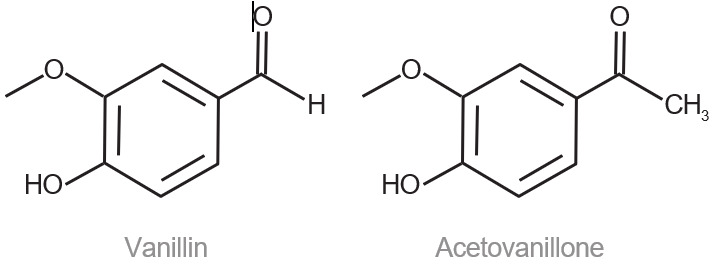
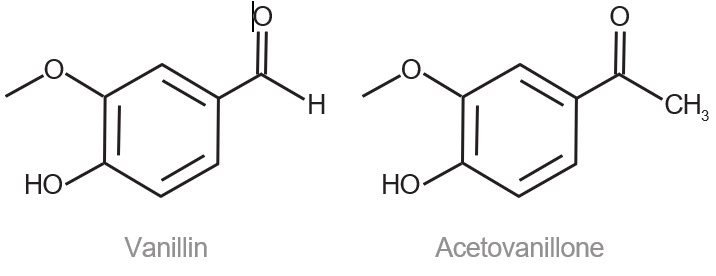
Figure 1 shows the chemical structures of vanillin and acetovanillone. The two molecules are nearly isomeric, sharing an identical 4-hydroxy-3-methoxyphenyl ring system and differing only in their terminal carbonyl substituent: vanillin bears a terminal aldehyde group (–CHO), whereas acetovanillone bears a methyl ketone group (–COCH3). On structural grounds alone, we speculatively hypothesized that vanillin might preferentially produce formaldehyde via cleavage of its aldehyde group, while acetovanillone might preferentially produce acetaldehyde via cleavage of its methyl ketone group, by analogy to the moiety-based mechanism proposed by Gillman et al.30 We emphasize that this is a structural inference rather than a mechanistically demonstrated pathway. If feasible, such a mechanism could help explain how popular flavored e-liquids generate elevated aldehydes in e-cigarette aerosol based on the specific flavoring chemicals used.
_and_acetovanillone_(right)_used_in_this_study.png)
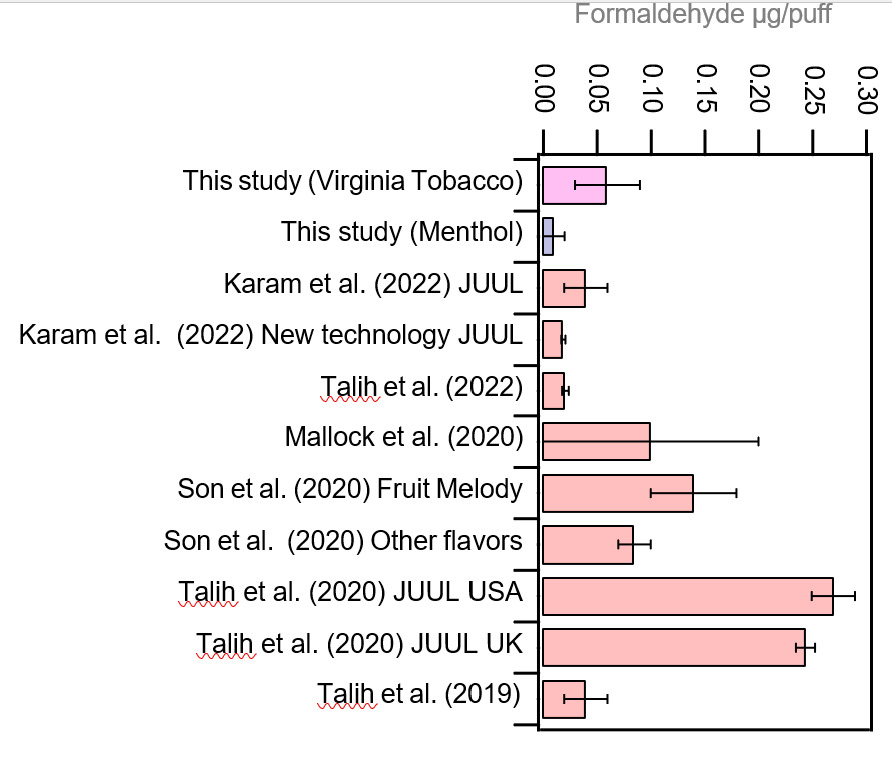
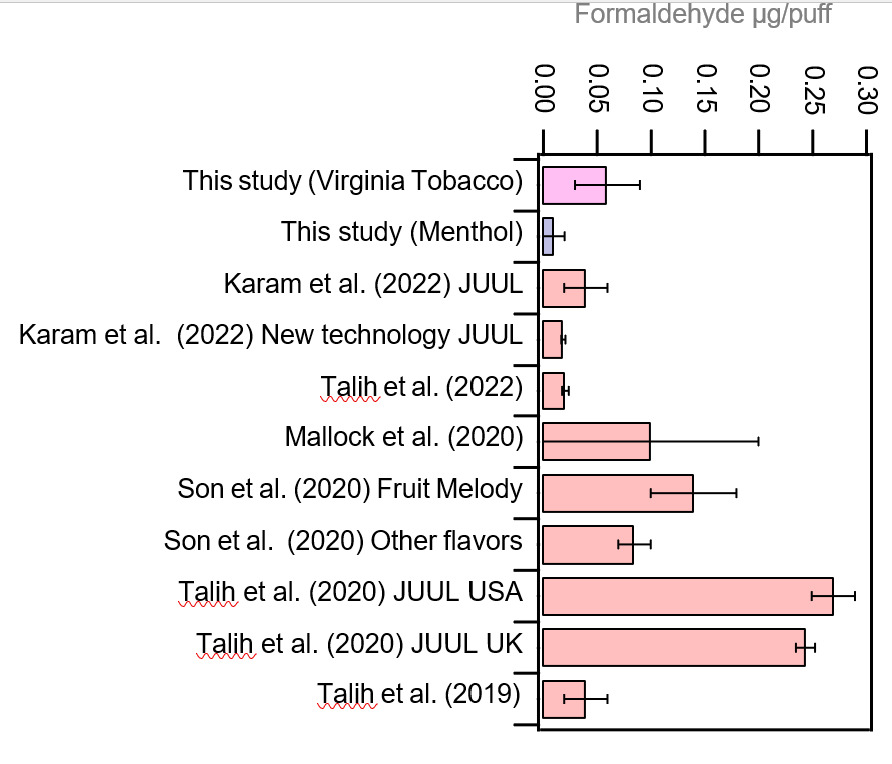
For the other portion of this study, the fourth-generation JUUL e-cigarette was used. Because systematic control of the e-liquid composition was not possible, commercially available pods were used: two flavors (Virginia Tobacco and Menthol) at 2 nicotine concentrations (3% [35 mg/mL] and 5% [59 mg/mL]). We note that this comparison rests on the assumption that flavoring composition is the only meaningful difference between the Virginia Tobacco and Menthol pods; proprietary differences in solvent ratio, humectant content, or excipient formulation cannot be ruled out. As noted by Talih et al,38 there is high variability in reports of formaldehyde concentration for the JUUL aerosol in the literature, ranging from 0.02 ± 0.02 μg/puff39 to 0.021 ± 0.003 μg/puff38 to 0.27 ± 0.02 μg/puff.40 The reason for this variability is not well understood but could be attributed to different flavorings or to manufacturing variation between individual pods. Although the literature studies used similar techniques and puffing conditions, they used different flavors and pods manufactured for different markets, which may explain some of the variability. For example, Son et al41 reported that the Fruit Medley flavor produced more formaldehyde than other JUUL flavors studied (Cool Mint, Virginia Tobacco, and Creme Brulee). Formaldehyde concentrations from the other JUUL flavor currently available in the US, Menthol, have not been reported to our knowledge. By comparing aldehyde concentrations from the 2 currently available US flavors at 2 different nicotine concentrations, this study aims to better understand how flavorings potentially influence formaldehyde production in JUUL and similar fourth-generation devices.
The two e-cigarette types have markedly different power and temperature settings, which are expected to affect aldehyde production.16 The third-generation Vaporesso is a high-power device (60 W, 204°C) whereas the JUUL is a low-power device (6-8 W, approximately 215°C as estimated by Talih et al42). The 2 case studies therefore allow some comparison of how device power may affect aldehyde production, although different flavors were studied in each case, and nicotine was not present in the Vaporesso portion. More details of the e-cigarettes and settings used are given in the Materials and Methods section.
Materials and Methods
Puffing Apparatus
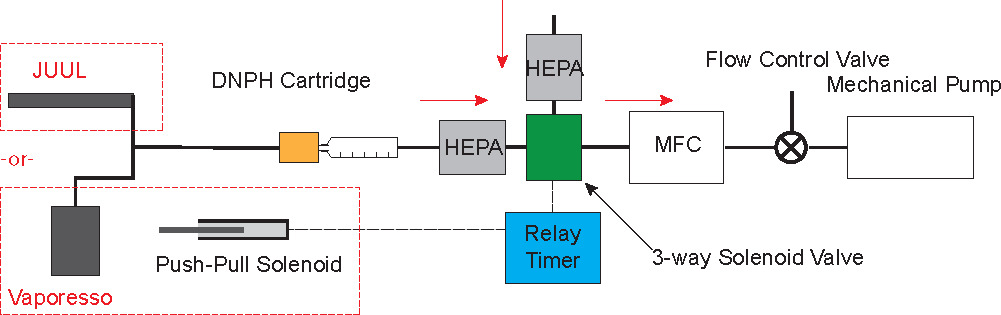
Figure 2 shows the puffing apparatus designed and used for this study, based on a similar design by Khlystov and Samburova.27 The JUUL e-cigarette fires automatically when exposed to a pressure drop across the tip. The Vaporesso, however, requires manual puffing by pressing a button on the side of the device. To puff the Vaporesso, a push-pull solenoid was used to press the button, timed with pulling air through the device. A mechanical pump operated continuously to provide negative pressure to the apparatus. The flow rate was controlled by a mass flow controller and confirmed independently with a bubble-type flow meter. A 3-way solenoid valve was used to switch the air flow between a bypass position (drawing in room air) and pulling air through the DNPH cartridge and e-cigarette. A relay timer was used to control the puffing duration. The overall flow rate through the e-cigarette was set to simulate a human breath (18.5 ± 1.0 mL/s), in accordance with the Cooperation Centre for Scientific Research Relative to Tobacco (CORESTA) guidelines used in other studies.43 The ramp-up and ramp-down portions of the CORESTA-recommended profile were not actively controlled in this experiment, which may affect direct comparability of puff topography with other studies.
For the Vaporesso experiment, the 3-way solenoid valve was opened for a total of 5 seconds, with puffing controlled by a 3-second push after a 1-second delay; the 3-second puff duration matches the CORESTA standard.43 For the JUUL, the 3-way solenoid was opened for 5 seconds. A 5-second puff duration was used for the JUUL—deviating from the 3-second CORESTA standard used in most literature comparisons—because aldehyde concentrations were below the limit of detection at 3-second puffs in preliminary tests of the apparatus. Because the longer puff duration draws more aerosol per puff, μg/puff values for the JUUL should be regarded as upper-bound estimates relative to 3-second-puff literature values. This limitation is further discussed in the Limitations subsection.
For the Vaporesso case study, a laboratory-made e-liquid solution was prepared by mixing PG (CAS 57-55-6; Fisher) and glycerol (CAS 56-81-5; Sigma Aldrich) at a v/v ratio of 30% to 70%, respectively. The solution was mixed vigorously without heating to avoid premature thermal degradation. For flavored e-liquid, vanillin (CAS 121-33-5; Sigma Aldrich) and acetovanillone (CAS 498-02-2; TCI Chemicals) were weighed and added to separate PG/VG mixtures at a concentration of 5 mg/mL. One Vaporesso Revenger Mini body was used throughout, purchased locally in Fullerton, California, and fully charged prior to each experiment. For each puffing set, the e-liquid tank was assembled with a GT2 stainless-steel coil (0.4 Ω resistance) operating at 60 W and a coil temperature setpoint of 400°F (204°C) per the manufacturer recommendations. Each GT2 coil was used for 3 consecutive puffing sessions, then replaced; each session consisted of 10 warm-up puffs followed by 20 sampled puffs. Three coils were used for each of the 3 e-liquid types (n = 9 sampled puffing sessions per e-liquid; 180 sampled puffs per e-liquid type in total). Aldehyde yield did not differ significantly across the 3 consecutive sessions for any e-liquid, so successive-session effects on the same coil are not expected to influence the results in this study.
The JUUL battery body and JUUL pods (JUUL Labs Inc) were purchased locally in Fullerton, California. Based on visual inspection of the pods, we assume that the pods used in this study are similar to the older JUUL pod type from the study by Karam et al,39 which used silica wicks. At the time of this study, the JUUL offered 2 flavors in the California market: Virginia Tobacco and Menthol. Each flavor was available in 3.0% (35 mg/mL) and 5.0% (59 mg/mL) nicotine concentrations. The JUUL delivers a manufacturer-fixed power output of 6 to 8 W at a coil temperature of approximately 215°C, with the user unable to influence the settings.38–40,42,44 The same JUUL battery and control module was used for all measurements, recharged to full capacity before each experiment. Each measurement collected 10 warm-up puffs followed by 40 sampled puffs from a fresh pod (one pod per measurement, with the pod approximately exhausted at 40 sampled puffs); 4 to 5 pods were measured per flavor and nicotine condition.
Aldehyde Derivatization With DNPH
DNPH has been used to derivatize aldehydes and ketones to light-absorbing compounds in e-cigarette aerosol in several studies. The reaction of DNPH with aldehydes and ketones in impregnated cartridges is summarized in the article by Uchiyama et al.3 Briefly, the nucleophilic NH2 group on DNPH attacks the carbonyl carbon of the aldehyde or ketone, condensing (with loss of water) to form a 2,4-dinitrophenylhydrazone adduct. The aromatic portion of the DNPH gives a characteristic absorption at λ ≈ 365 nm, allowing analysis by reversed-phase HPLC. The reaction is selective for carbonyl-containing compounds (aldehydes and ketones); identity assignments in our study were made by retention time matching to an aldehyde-DNPH standard. Because the standard contained only aldehyde-DNPH derivatives, any potential co-elution of ketone-DNPH derivatives at aldehyde retention times was not directly assessed.
HPLC Analysis
The extracted cartridge eluent was analyzed on an Agilent 1100 Series HPLC system equipped with a photodiode array detector and a Microsorb column (C18, 5 μm, 4.6 mm × 250 mm; Agilent). Column temperature was equilibrated to 30°C. The diode array detector was set to monitor 365 nm. Identity of analytes was determined by comparison of retention time to an external standard mixture of aldehyde-DNPH derivatives (Aldehyde-Ketone-DNPH TO-11A Calibration Standard; Restek Corp).
All correlation coefficients (R2 values) for calibration curves were greater than 0.995. New calibration curves were obtained for each puffing session to account for instrument variation. Solution-phase limits of detection (LODs) of the formaldehyde-DNPH and acetaldehyde-DNPH derivatives were determined by 9 replicate measurements of a low-concentration standard, using LOD = 3 s/m, where s is the standard deviation of the replicate measurements and m is the slope of the calibration curve. The solution-phase LODs were 0.031 μg/mL for formaldehyde and 0.082 μg/mL for acetaldehyde. These solution-phase LODs were converted to nominal per-puff LODs by multiplying by the cartridge extraction volume and dividing by the number of sampled puffs. Because the 2 devices used different extraction volumes and puff counts, the per-puff LODs differ by device. For the JUUL (40 sampled puffs, 5.0 mL extraction), the per-puff LOD for formaldehyde was 0.004 μg/puff. For the Vaporesso (20 sampled puffs, 10.0 mL extraction), the per-puff LODs were 0.015 μg/puff for formaldehyde and 0.041 μg/puff for acetaldehyde. Of the 15 aldehyde-DNPH derivatives mapped from the calibration standard, only formaldehyde and acetaldehyde were consistently above the LOD across all measurements performed using the Vaporesso, and only formaldehyde was consistently above the LOD for the JUUL portion. Future studies using more sensitive techniques may provide further insight into other aldehydes.
As a control, an analysis was conducted on unreacted DNPH cartridges. This was done to confirm that there was no contribution of raw DNPH to the measurement of aldehyde peak area in the collected samples. A fresh DNPH cartridge was eluted with 10 mL of acetonitrile and injected on HPLC; sample cartridges were extracted using the identical procedure (10 mL acetonitrile elution, no further extraction step) so that the control was matched to the samples in solvent, volume, and method. No aldehyde-DNPH peaks were detected from the unreacted-cartridge control.
Statistical Analysis
All pairwise comparisons were performed using 2-sample, 2-tailed, equal-variance t tests. Statistical significance was assessed at the α = 0.05 level. Analyses were performed in Microsoft Excel (Data Analysis ToolPak) and IgorPro 9 (WaveMetrics). Data were not formally tested for normality, and no correction for multiple comparisons was applied across the 3 pairwise Vaporesso comparisons; reported P values should therefore be interpreted as uncorrected for multiple testing. For Vaporesso acetaldehyde and JUUL Menthol formaldehyde, measurements at or below the relevant device-specific LOD were substituted with the LOD value for purposes of summary statistics and t tests; the implications of this substitution are discussed in the Results section and Limitations subsection.
Results
Third-Generation Device: Vaporesso
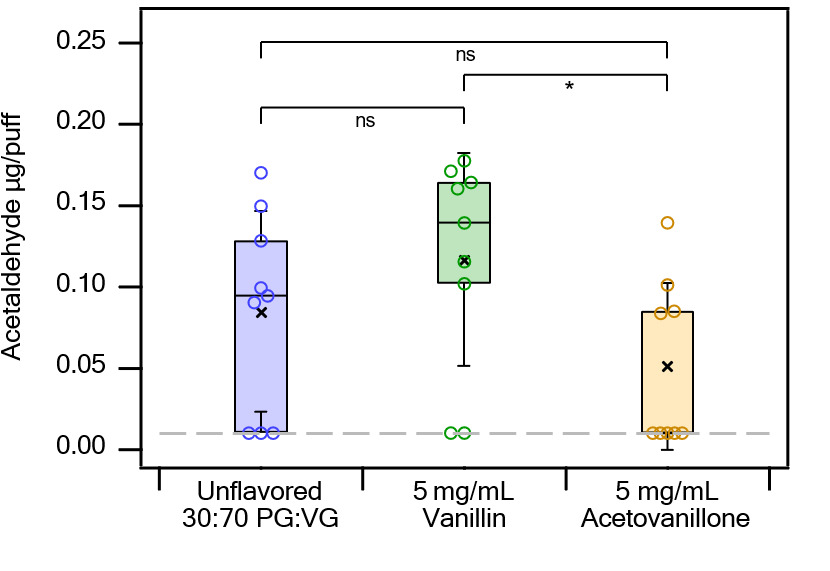
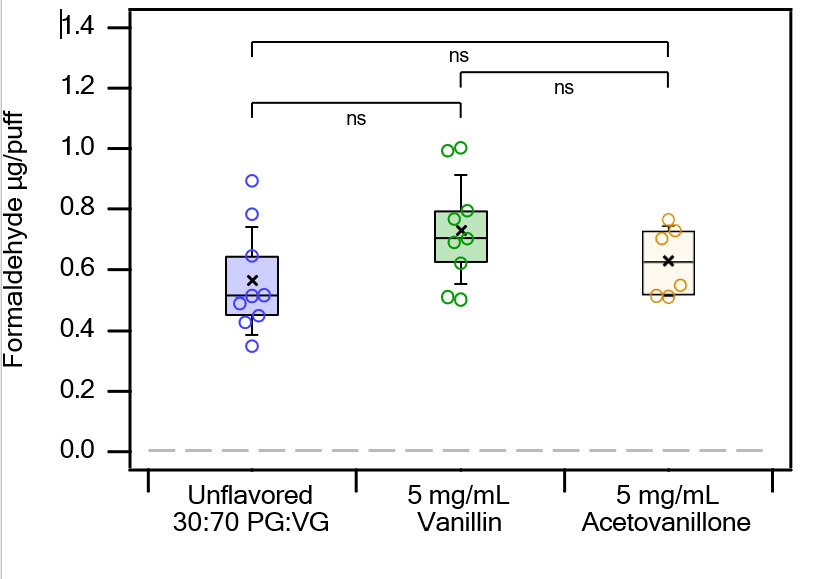
For the Vaporesso, 3 e-liquid types were measured: blank (30% PG:70% VG), 5 mg/mL vanillin in PG:VG, and 5 mg/mL acetovanillone in PG:VG. Each e-liquid was measured using 3 GT2 coils, with each coil run for 3 consecutive puffing sessions (n = 9 sampled puffing sessions per e-liquid). Across all measurements, only formaldehyde and acetaldehyde were consistently above the LOD; results are summarized in Figure 3 and Figure 4.
Mean formaldehyde concentrations were 0.56 ± 0.18 μg/puff for the unflavored e-liquid, 0.73 ± 0.18 μg/puff for the vanillin-flavored e-liquid, and 0.61 ± 0.10 μg/puff for the acetovanillone-flavored e-liquid (Figure 3). No pairwise difference reached statistical significance (plain vs vanillin, P = .065; plain vs acetovanillone, P = .48; vanillin vs acetovanillone, P = .10). The addition of vanillin or acetovanillone at 5 mg/mL, therefore, did not produce a statistically significant change in formaldehyde concentration relative to the unflavored e-liquid.
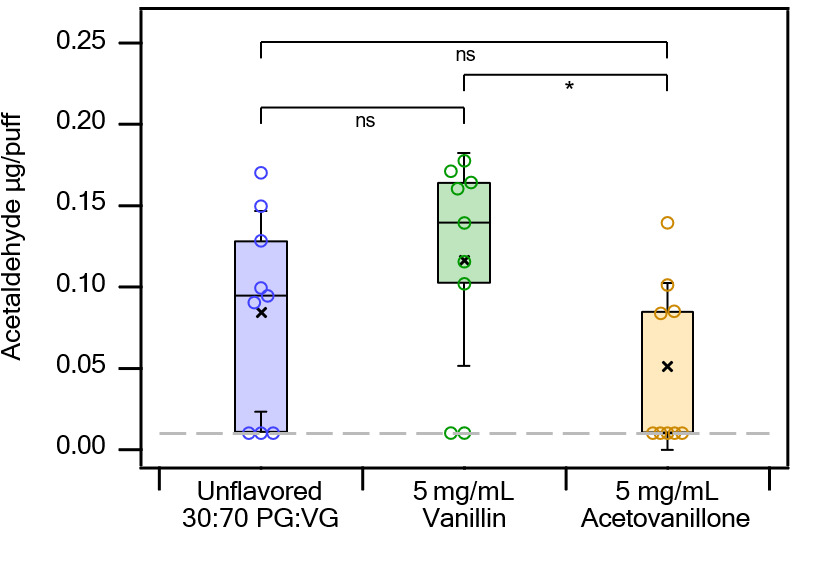
Mean acetaldehyde concentrations were 0.09 ± 0.05 μg/puff (plain), 0.12 ± 0.05 μg/puff (vanillin), and 0.07 ± 0.04 μg/puff (acetovanillone) (Figure 4). Several Vaporesso acetaldehyde measurements were below the LOD; for purposes of summary statistics and t tests, these were substituted with the LOD value (0.041 μg/puff), and group means containing LOD-substituted points should be regarded as upper-bound estimates. With this caveat, the vanillin-flavored e-liquid produced significantly more acetaldehyde than the acetovanillone-flavored e-liquid (P = .02), whereas neither flavored e-liquid differed significantly from the unflavored e-liquid (plain vs vanillin, P = .25; plain vs acetovanillone, P = .20).
Fourth-Generation Device: JUUL
For the JUUL device, the 2 flavors currently available in the US market (Virginia Tobacco and Menthol) were measured at both 3% and 5% nicotine concentrations. Of the 15 aldehyde-DNPH derivatives mapped from the calibration standard, only formaldehyde was consistently above the LOD for the JUUL aerosol. The relatively low aldehyde concentrations for the JUUL are likely attributable to its low operating power (6-8 W). The results presented herein apply to the specific JUUL flavors and pods tested and are not necessarily generalizable to other e-cigarettes or other flavors.
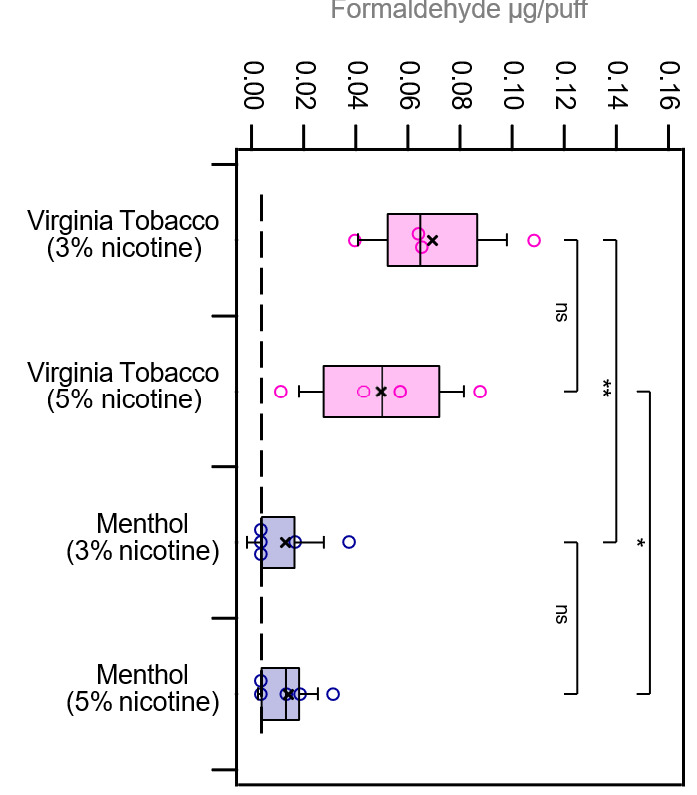
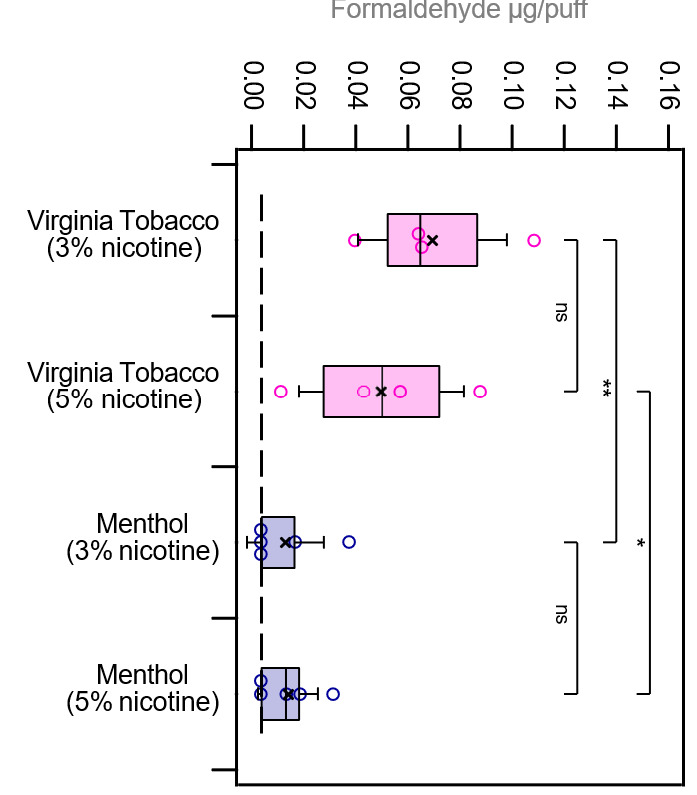
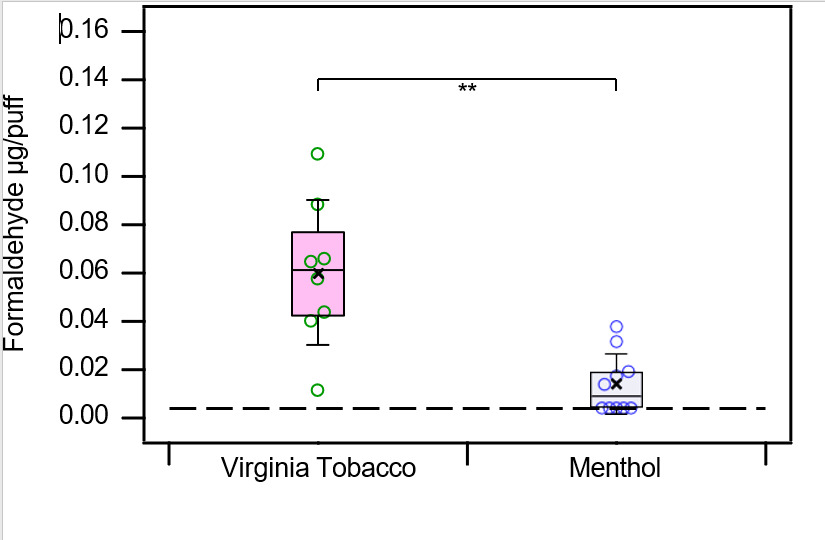
The formaldehyde concentration from Menthol-flavored JUUL pods was at or below the LOD for 50% of measurements. For statistical purposes, measurements less than the LOD were substituted with the LOD value (0.004 μg/puff); reported Menthol concentrations should be considered upper-bound estimates. Figure 5 indicates no statistically significant effect of nicotine concentration on formaldehyde production within either flavor (Virginia Tobacco 3% vs 5%, P > .05; Menthol 3% vs 5%, P > .05) but a statistically significant flavor effect at both nicotine concentrations.
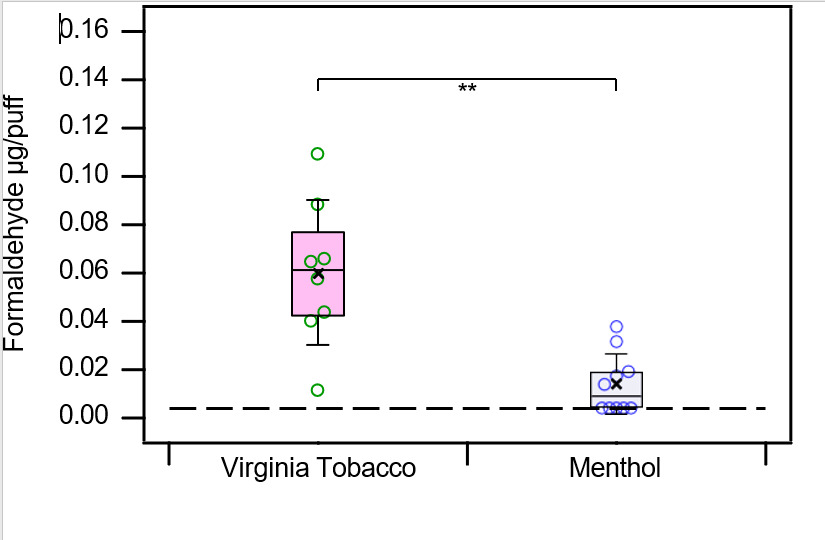
Because nicotine concentration did not significantly affect formaldehyde production, the flavor results were pooled across nicotine concentrations for the comparison shown in Figure 6.
The pooled formaldehyde concentrations were 0.060 ± 0.030 μg/puff for Virginia Tobacco (n = 8) and 0.014 ± 0.012 μg/puff for Menthol (n = 10), a statistically significant difference (P < .001) corresponding to approximately a 6-fold higher mean for Virginia Tobacco. We note that this result rests on Menthol data of which 50% were LOD-substituted; the difference is robust to this substitution because the magnitude of the difference exceeds the LOD by several-fold, but readers should interpret the Menthol mean as an upper-bound estimate.
Discussion
Third-Generation Vaporesso
For the Vaporesso, 5 mg/mL vanillin or acetovanillone did not significantly change formaldehyde concentrations relative to unflavored 30:70 PG:VG e-liquid, contrary to our initial hypothesis that the aldehyde or methyl ketone moiety of these flavoring compounds would preferentially produce formaldehyde or acetaldehyde, respectively. There was significantly more acetaldehyde from vanillin vs acetovanillone (P = .02), but there was no significant difference in acetaldehyde between the flavored e-liquids and the unflavored e-liquid. The unexpected direction of this difference—vanillin producing more acetaldehyde than acetovanillone, despite acetovanillone bearing the methyl ketone group structurally suggestive of acetaldehyde release—is most plausibly explained by the observation that the majority of both flavoring compounds did not undergo thermal decomposition under the conditions tested. Detailed HPLC analysis by Nguyen,32 using a dual-channel (280 nm/365 nm) photodiode array detector, identified intact vanillin in the Vaporesso aerosol of the same samples used in this study, indicating that the bulk of the flavorant passed through the device chemically unchanged. This is consistent with literature reports that vanillin is thermally stable up to approximately 250°C,45 whereas the Vaporesso coil temperature in this study was set to 204°C—below the reported decomposition threshold. Under these conditions, the statistically significant difference in acetaldehyde between vanillin and acetovanillone may reflect minor differences in incidental fragmentation pathways or session-to-session variability rather than the moiety-based mechanism originally hypothesized.
The formaldehyde and acetaldehyde concentrations observed for the Vaporesso are consistent with studies on similar third-generation devices operating in the 200°C range. Li et al16 reported formaldehyde of 0.07 ± 0.06 μg/puff at 375°F and 0.27 ± 0.07 μg/puff at 420°F for 30:70 PG:VG e-liquids, and acetaldehyde of 0.04 ± 0.02 to 0.15 ± 0.05 μg/puff over the same temperature range. Our formaldehyde concentrations at 400°F were approximately 2 to 3 times higher than Li et al.'s measurement at 420°F. Our acetaldehyde concentrations fell within the range they reported. Zelinkova and Wenzl,46 in a separate study of a different Vaporesso model (SWAG), reported formaldehyde concentrations ranging from approximately 0.4 μg/puff at 50 W to 0.8 μg/puff at 70 W using GT4 stainless-steel coils, in close agreement with our result at 60 W. We did not observe an increase in aldehyde yield across 3 consecutive puffing sessions on the same coil, indicating that the “coil gunk” effect reported by Sleiman et al47 was not relevant under our protocol of three 20-puff sessions per coil (compared with nine 50-puff sessions in their study).
Fourth-Generation JUUL
For the JUUL device, Virginia Tobacco pods produced approximately 6 times more formaldehyde than Menthol pods (0.060 ± 0.030 vs 0.014 ± 0.012 μg/puff; P < .001), while nicotine concentration (3% vs 5%) did not significantly affect formaldehyde production within either flavor. To our knowledge, this is the first study to report statistically significantly different aldehyde concentrations between the 2 JUUL flavors currently available in the US market. Our result is consistent with findings from the study by Son et al,12 who noted that the Fruit Medley flavor produced more formaldehyde than other JUUL flavors studied (Cool Mint, Virginia Tobacco, and Creme Brulee), supporting the broader inference that flavor identity can influence formaldehyde production in JUUL pods. Figure 7 places our results in the context of prior literature on JUUL formaldehyde concentrations; the absolute concentration measured for Virginia Tobacco (0.060 ± 0.030 μg/puff) lies within the cluster of values reported by Talih et al42 (0.04 ± 0.02 μg/puff), Talih et al38 (0.021 ± 0.003 μg/puff), and Karam et al39 (older-generation pods, 0.04 ± 0.02 μg/puff), and well below the highest reported value of 0.27 ± 0.02 μg/puff from Talih et al40 (JUUL pods sourced from outside the US market). Although it is not known how the flavoring compounds differ between the Golden Tobacco pods used in the study by Karam et al39 (an older UK-market JUUL flavor) and the Virginia Tobacco used in our study, our measured concentration (0.060 ± 0.030 μg/puff) is slightly higher than the older-generation JUUL pods from the study by Karam et al.
_and_previously_reported.png)
The result that nicotine concentration (3% vs 5%) did not significantly affect JUUL formaldehyde production is consistent with findings from the study by Talih et al,40 who reported similar formaldehyde levels between UK pods (approximately 1.5% nicotine) and US pods (approximately 5% nicotine), although both of their absolute levels were higher than ours.
Cross-Device Comparison
The Vaporesso produced approximately 10 times more formaldehyde than the JUUL Virginia Tobacco and approximately 60 times more formaldehyde than the JUUL Menthol. The direction of this difference is consistent with the higher operating power of the Vaporesso (60 W) compared with the JUUL (6-8 W). Li et al16 reported that higher coil power yields higher aldehyde concentrations in e-cigarette aerosol. However, the cross-device comparison is confounded by differences in flavor composition, solvent ratio, nicotine content, and puff duration (3 s for Vaporesso vs 5 s for JUUL), so no firm mechanistic conclusion about the device-power effect can be drawn from this difference.
Comparison to Combustible Cigarettes
Aldehyde concentrations measured for both e-cigarettes in this study are substantially below those reported for combustible tobacco cigarettes. Fujioka and Shibamoto48 found acetaldehyde of 1110 to 2101 μg per cigarette and formaldehyde of 87.0 to 243 μg per cigarette. Assuming 10 puffs per combustible cigarette, this corresponds to approximately 30 times more formaldehyde than the Vaporesso, 300 times more formaldehyde than the JUUL, and approximately 1000 times more acetaldehyde than the Vaporesso on a per-puff basis. The result is consistent with the findings of Margham et al,7 who used a Vype ePen—a low-power (2.8-4.4 W) closed-system pod-type e-cigarette architecturally more similar to the JUUL than to the Vaporesso—and reported aldehyde concentrations 92% to 99% lower than those from a Kentucky combustible cigarette. While these comparisons indicate substantially lower per-puff aldehyde yields from e-cigarettes than from combustible cigarettes, they do not constitute a safety endorsement: cumulative daily aldehyde exposure depends on puff frequency, and doses of formaldehyde—an IARC group 1 carcinogen—that are lower than those from combustible cigarettes remain of concern from a chronic-exposure standpoint.
Limitations
Several limitations apply to this study. Most directly, the 5-second puff duration used for the JUUL deviates from the 3-second CORESTA standard used in nearly all studies shown in Figure 7. The deviation was necessitated by very low signal at 3-second puffs in preliminary tests of the apparatus, but the longer puff draws more aerosol per puff and will tend to produce higher μicrogram-per-puff values than studies using 3-second puffs. The reported JUUL concentrations in this study should therefore be regarded as upper-bound estimates relative to values measured using standard 3-second protocols.
The sensitivity of the experimental procedure was also relatively low. Several Vaporesso acetaldehyde measurements and many JUUL Menthol formaldehyde measurements were at or below the device-specific LOD. For the JUUL Menthol comparison, 50% of measurements were LOD-substituted. The Virginia Tobacco vs Menthol comparison remained statistically significant with this substitution because the mean difference exceeds the LOD by several-fold, but readers should interpret reported Menthol means as upper bounds. The Vaporesso vanillin vs acetovanillone acetaldehyde difference (P = .02) should be interpreted with caution, as several measurements in that comparison were also LOD-substituted.
The concentrations of formaldehyde and acetaldehyde found for the Vaporesso may not represent all Vaporesso models and other third-generation devices. For example, Zelinkova and Wenzl46 reported up to approximately 30 μg/puff formaldehyde and approximately 15 μg/puff acetaldehyde for the Vaporesso SWAG model using 0.5 Ω GT cCELL ceramic coils at 60 W—roughly 30 times higher than the levels observed in this study using the Vaporesso Revenger Mini with 0.4 Ω GT2 stainless-steel coils at the same wattage. Coil material (stainless steel vs ceramic) and coil geometry are therefore likely to produce substantial within-brand variability. Since only one Vaporesso Revenger Mini body was used, device-to-device variability within a single product was also not evaluated; Gillman et al30 have shown that this can affect formaldehyde and acetaldehyde measurements.
The 2 flavoring chemicals used in this study, vanillin and acetovanillone, are not representative of all flavoring chemicals in terms of their thermal decomposition behavior or possible combined effects in mixtures. Son et al12 observed variation across 8 flavoring agents (strawberry, dragon fruit, menthol, sweet cream, Bavarian, cinnamon, bubble gum, and graham cracker) tested individually and as mixtures. Omaiye et al35 identified up to 155 distinct flavor chemicals across 277 commercial e-liquid refill fluids. It is possible that flavoring chemicals with lower thermal stability than vanillin would decompose under the conditions specified in this study and contribute meaningfully to aldehyde emissions; this study cannot exclude that possibility. Only one solvent ratio (30:70 PG:VG) was used; varying the PG:VG ratio has been shown to influence emissions of certain potentially harmful compounds.9
Finally, the JUUL flavor comparison rests on the assumption that the only meaningful difference between Virginia Tobacco and Menthol pods is the flavoring composition. Proprietary differences in solvent ratio, humectant content, or excipients between the 2 pod types cannot be ruled out and are confounding factors for the flavor-effect inference.
Conclusions
E-cigarettes are known to produce potentially harmful aldehydes such as formaldehyde and acetaldehyde, but the mechanism by which they form is not fully understood. While thermal degradation of PG and VG solvents is an established pathway, the relative contribution of flavoring-compound decomposition to aldehyde production is not well characterized. This study presents 2 case studies aimed at better understanding how flavorings may influence aldehyde production in e-cigarettes.
A third-generation mod-type e-cigarette (Vaporesso Revenger Mini) was used in a systematic study to determine formaldehyde and acetaldehyde concentrations from laboratory-produced unflavored e-liquid and e-liquids with 5 mg/mL vanillin or acetovanillone. Neither flavoring at 5 mg/mL produced a statistically significant increase in formaldehyde concentration compared with the unflavored e-liquid. A statistically significant difference was observed for the amount of acetaldehyde in vanillin vs acetovanillone, with more being found in vanillin (P = .02), though neither flavored e-liquid differed significantly from the unflavored e-liquid. This unexpected finding is may be attributed to the observation, reported by Nguyen,32 that the majority of vanillin and acetovanillone passed through the device chemically unchanged, consistent with literature reports of vanillin thermal stability up to approximately 250°C45—above the 204°C coil-temperature setpoint used in our study.
A fourth-generation pod-type e-cigarette (JUUL) was also tested using the 2 flavors currently available in the US market (Virginia Tobacco and Menthol) at 2 nicotine concentrations (3% and 5%). A statistically significant difference in formaldehyde concentration was observed between Virginia Tobacco and Menthol pods (0.060 ± 0.030 vs 0.014 ± 0.012 μg/puff; P < .001), with Virginia Tobacco producing approximately 6 times more formaldehyde than Menthol. The nicotine concentrations used (3% and 5%) did not statistically affect formaldehyde concentration within either flavor.
The Vaporesso produced approximately 10 times more formaldehyde than the JUUL Virginia Tobacco and approximately 60 times more than the JUUL Menthol, consistent with the higher operating power of the Vaporesso (60 W) compared with the JUUL (6-8 W). However, this is confounded by differences in device design, flavor composition, solvent ratio, nicotine content, and puff duration; therefore, no firm mechanistic conclusion about the device-power effect can be drawn from the cross-device comparison.
Together, these studies indicate that flavor identity can meaningfully influence aldehyde emissions in some e-cigarette devices, while in other devices and at certain operating temperatures, the bulk of the flavoring compound may pass through the device without thermal decomposition. Further systematic mechanistic studies of additional flavoring chemicals under controlled puffing conditions are needed—particularly chemicals with lower reported thermal stability than vanillin and acetovanillone—to inform both toxicological assessment and regulatory frameworks for e-cigarette product safety.
Acknowledgement
Funding was provided by the College of Natural Sciences and Mathematics, California State University, Fullerton.
Supporting Information Available
The data used to generate the figures are available at the following link: https://doi.org/10.6084/m9.figshare.27904770.v1
Conflict of Interest Statement
The authors declare no conflicts of interest.