
INTRODUCTION
Polyendocrine metabolic ovarian syndrome (PMOS) arises from genetic and environmental factors that disrupt neuroendocrine function, leading to hyperandrogenism and hyperinsulinemia. Increased pulsatile secretion of gonadotropin-releasing hormone, elevated luteinizing hormone, and ovarian thecal androgen production occur alongside relatively suppressed follicle-stimulating hormone, producing anovulation and, clinically, ovulatory dysfunction and infertility. Polyendocrine metabolic ovarian syndrome is frequently accompanied by metabolic syndrome, insulin resistance, and gallbladder disease. Chronic hyperinsulinemia promotes lipogenesis and inhibits lipolysis, contributing to visceral adiposity and gallstone risk. Insulin resistance also produces dyslipidemia, including elevated triglycerides, low high-density lipoprotein cholesterol level, and elevated very-low-density lipoprotein, which favors cholesterol-rich bile and impairs bile acid synthesis, encouraging gallstone formation.1 This mechanism supports the reported 3-fold increase in common gallbladder pathologies, such as cholelithiasis, cholecystitis, and cholangitis, and explains their association with risk factors including metabolic syndrome, obesity, and type 2 diabetes mellitus (T2DM).2–5 Cholelithiasis denotes the formation of gallstones within the gallbladder; cholecystitis refers to inflammation of the gallbladder wall, most often precipitated by cystic duct obstruction by a stone; and cholangitis is inflammation of the biliary tree, typically caused by bacterial infection superimposed on obstruction of the common bile duct.
Metformin, derived from galegine, a natural compound found in Galega officinalis, has a complex mechanism of action involving multiple sites.6 It decreases hepatic glucose production both directly and indirectly, promotes intestinal glucose utilization, increases glucagon-like peptide-1 (GLP-1) secretion, and alters the gut microbiome.6,7 Among its major long-term effects is enhancement of hepatic insulin sensitivity, likely mediated through AMP-activated protein kinase.6 Clinically, metformin is a first-line treatment for T2DM because of its antihyperglycemic properties, and it is also used to manage insulin resistance and hyperinsulinemia in individuals with PMOS, a population predisposed to long-term metabolic complications, including T2DM.7 Metformin’s direct effects on the gallbladder are less well characterized than its glycemic actions; by raising endogenous GLP-1 and modifying bile acid handling, it may influence gallbladder motility and bile composition, although direct evidence linking metformin to gallbladder disease risk in PMOS remains limited.6,7
Glucagon-like peptide-1 receptor agonists (GLP-1 RAs) are another class of medication used to treat T2DM and obesity. These agents stimulate insulin secretion in response to oral glucose intake by augmenting the incretin effect.8 The incretin effect is the normal physiological phenomenon whereby insulin secretion is greater after oral glucose than after an equivalent intravenous glucose load, owing to the postprandial release of gut-derived incretin hormones; this response is impaired, though not abolished, in T2DM.9 Glucagon-like peptide-1 RAs activate cellular pathways that enhance calcium-dependent insulin release, improve glucose sensitivity, and modulate gene expression related to insulin regulation.10 Although the incretin effect is diminished in T2DM, the insulinotropic and glucagonostatic actions of GLP-1 are sufficiently preserved that pharmacological GLP-1 receptor stimulation lowers blood glucose and improves glycemic control.9 Additional actions include delayed gastric emptying and suppression of glucagon secretion when blood glucose is elevated.8 Glucagon-like peptide-1 also acts beyond the gut on adipose tissue, bone, skeletal muscle, liver, and the neuroendocrine and cardiovascular systems. Whether the incretin effect is similarly impaired in PMOS has not been directly established; because the insulin resistance and hyperinsulinemia that characterize PMOS overlap mechanistically with T2DM, GLP-1 RAs are expected to exert comparable insulinotropic and weight-reducing effects in this population.
A systematic review of 26 randomized controlled trials reported that the GLP-1 RAs semaglutide and liraglutide achieved weight loss of up to 13.9% at 68 weeks and up to 5.8% at 26 weeks, respectively.11 Tirzepatide, a dual agonist of the glucose-dependent insulinotropic polypeptide (GIP) and GLP-1 receptors, was excluded from the present analysis to isolate the effect of GLP-1 RAs. Although GLP-1 RAs are approved primarily for T2DM and obesity, liraglutide has been shown to be more effective than metformin in reducing body weight, improving menstrual regularity, and lowering androgen levels in PMOS.12
Prior studies have reported an increased risk of gallbladder and biliary disease with GLP-1 RA use, particularly at higher doses and longer durations.13 In a meta-analysis, GLP-1 RAs were associated with higher odds of gallbladder disease, predominantly in T2DM and obese populations treated at weight-loss doses.13 Two mechanisms are thought to contribute: rapid, pronounced weight loss raises biliary cholesterol saturation and promotes gallstone formation, and GLP-1 receptor activation may reduce gallbladder motility and delay emptying, favoring bile stasis. Whether this risk extends to the PMOS population, in which GLP-1 RAs are typically used off-label at lower doses, is unknown. This study addresses that gap using a large propensity score–matched cohort.
MATERIALS AND METHODS
This retrospective cohort study was conducted using the TriNetX Global Collaborative Network, a federated electronic health record database composed of de-identified patient data from participating healthcare organizations. At the time of analysis, the network included 142 healthcare organizations, with contributing institutions varying according to individual query response rates. Data within TriNetX are compliant with the Health Insurance Portability and Accountability Act, and only aggregate, de-identified data are accessible to investigators.
Patient Population
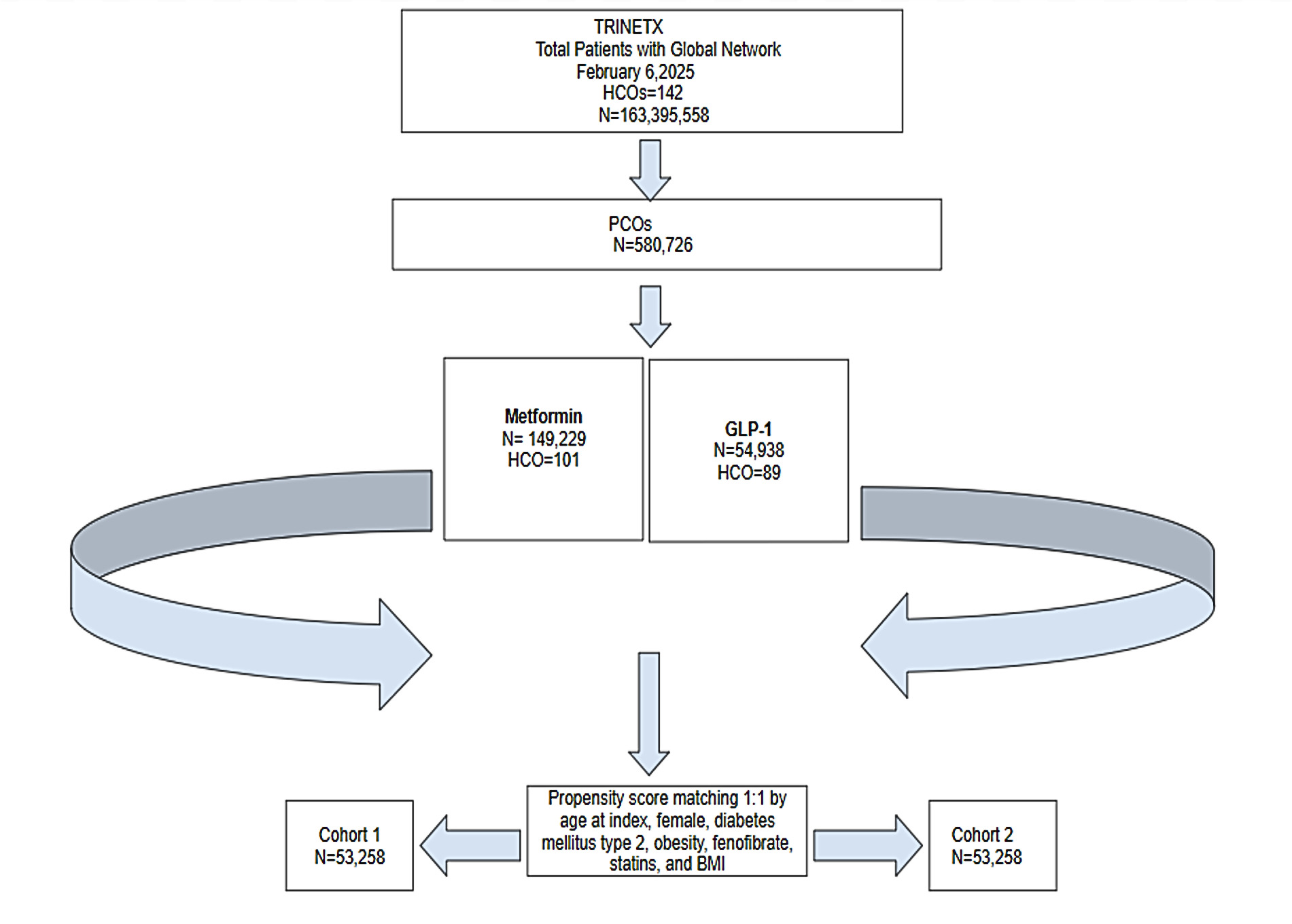
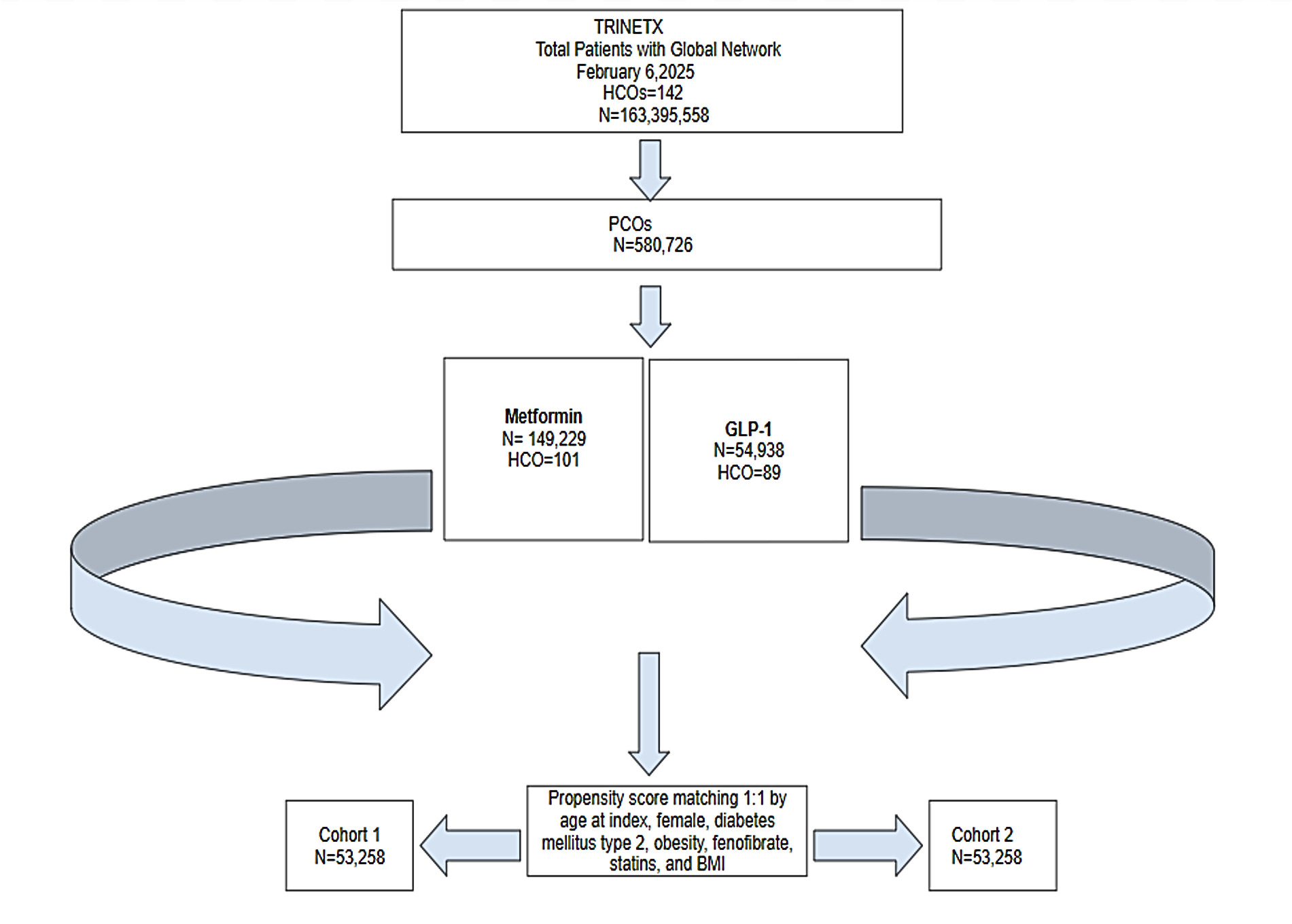
Two cohorts of patients with PMOS were identified using International Classification of Diseases, 10th Revision (ICD-10) code E28.2. Cohort 1 comprised patients with PMOS who were treated with metformin (Anatomical Therapeutic Chemical [ATC] code A10BA02), and cohort 2 comprised patients with PMOS who were treated with GLP-1 RAs (ATC code A10BJ), which includes liraglutide, semaglutide, dulaglutide, and exenatide. Tirzepatide, a dual GIP/GLP-1 RA, was excluded. The metformin cohort query yielded 149,229 eligible patients from 101 responding healthcare organizations, and the GLP-1 RA cohort yielded 54,938 eligible patients from 89 responding healthcare organizations. Patients in either cohort were not restricted from concurrent use of the comparator medication, reflecting real-world prescribing practice. Because concurrent exposure was permitted, some patients may have received both medications during follow-up, and the potential effect of this overlap is addressed in the Limitations subsection.
Index Event and Time Window
The index event was defined as the first documented occurrence of PMOS with concurrent exposure to either metformin or a GLP-1 RA. Outcomes were assessed from the date of the index event forward, and patients were censored after their last recorded encounter within the electronic health record. Patients whose index event occurred more than 20 years before the analysis dates were excluded automatically by the TriNetX platform; no patients met this exclusion criterion.
Matching and Covariate Adjustment
To reduce baseline confounding, 1:1 propensity score matching was performed using nearest-neighbor matching without replacement. Matching variables included age at index, female sex, T2DM (ICD-10 E11), unspecified obesity (ICD-10 E66.9), body mass index (ICD-10 Z68), fenofibrate use (ATC code C10AB05), and statin use (ATC code C10AA). Before matching, the metformin cohort was younger (mean age, 31.4 vs 36.6 years; standardized mean difference [SMD] 0.51), with lower rates of diabetes (11.3% vs 23.0%; SMD 0.31) and obesity (19.7% vs 39.5%; SMD, 0.44). After matching, all covariates were well balanced: mean age, 36.2 ± 10.4 vs 36.2 ± 10.1 years (SMD, 0.004); diabetes, 23.1% vs 21.8% (SMD, 0.03); obesity, 37.4% vs 38.1% (SMD, 0.014); White, 64.0% vs 63.8% (SMD, 0.004); Black or African American, 14.3% vs 14.3% (SMD, 0.001); Hispanic or Latino, 11.9% vs 11.8% (SMD, 0.004); Asian, 3.3% vs 3.4% (SMD, 0.006); and fenofibrate, 0.5% vs 0.4% (SMD, 0.007), with all statin agents showing SMD <0.02. All SMDs after propensity score matching were below 0.10, indicating adequate covariate balance. Following matching, each cohort contained 53,258 patients (Figure 1).
Outcomes and Analysis
The primary outcomes were cholelithiasis (ICD-10 K80), cholecystitis (ICD-10 K81), and cholangitis (ICD-10 K83.0). Analyses used an all-comers design that retained patients with prior gallbladder disease in both cohorts, because the study was designed to evaluate overall gallbladder disease burden in a population at elevated metabolic risk rather than strictly incident outcomes. Gallbladder disease burden was operationalized as the documented occurrence of any of these 3 coded diagnoses during the observation window, encompassing both prevalent and incident events under the all-comers design. Because both cohorts were balanced after matching across the major gallbladder risk factors, pre-existing disease burden is unlikely to explain the observed differences. Comparative analyses were performed using the TriNetX analytics platform. Measures-of-association analyses were used to calculate risk differences, risk ratios, odds ratios (ORs), and corresponding 95% confidence intervals (CIs). Kaplan-Meier survival analyses were performed for time-to-event outcomes, with comparisons assessed using log-rank testing and hazard ratios (HRs). The P values reported alongside HRs in the TriNetX output reflect the Schoenfeld residual test of the proportional hazards assumption and do not indicate HR significance; HR significance was established by the 95% CI and the log-rank P value. Statistical significance was defined as a 2-sided P < .05.
RESULTS
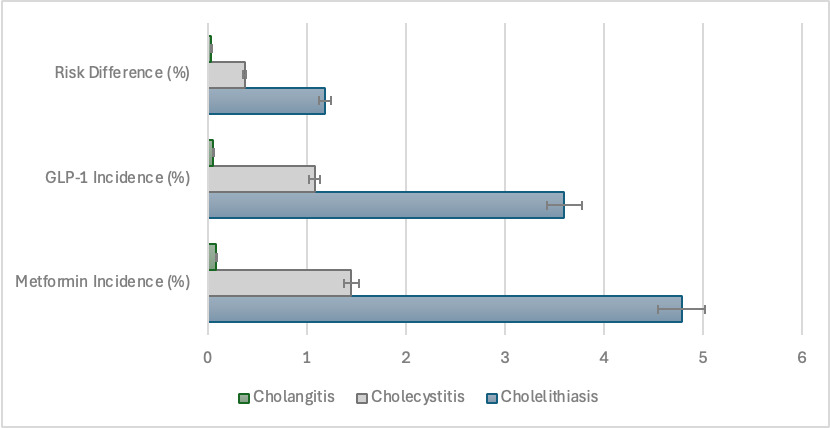
Among patients with PMOS treated with metformin vs GLP-1 RAs, we observed significant differences in gallbladder outcomes. The risk of cholelithiasis was higher with metformin, at an incidence of 4.78% compared with 3.60% among GLP-1 RA users (Figure 2).
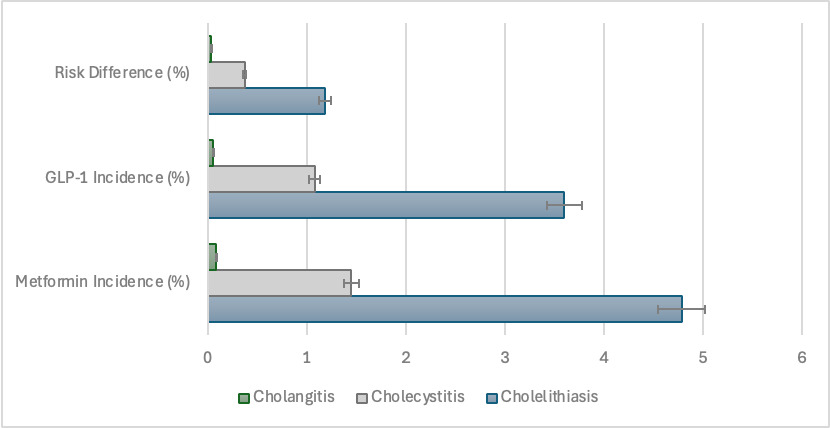
As shown in Table 1, the risk difference was 1.18% (95% CI, 0.94%-1.42%), with a risk ratio of 1.33 (95% CI, 1.25-1.41) and an OR of 1.34 (95% CI, 1.27-1.43), all statistically significant (P < .001). Kaplan-Meier analysis confirmed a higher event-free survival probability for the GLP-1 RA cohort (85.6%) than for the metformin cohort (83.8%), with an HR of 0.84 (95% CI, 0.79-0.89; log-rank P < .001).
For cholecystitis, metformin users had a higher incidence (1.4%) than GLP-1 RA users (1.1%), with a risk difference of 0.37% (95% CI, 0.24%-0.50%), a risk ratio of 1.34 (95% CI, 1.21-1.49), and an OR of 1.35 (95% CI, 1.21-1.50; P < .001). Kaplan-Meier analysis showed event-free survival of 95.2% in the metformin cohort vs 94.5% in the GLP-1 RA cohort (log-rank χ2 = 12.7; P < .001; HR, 0.82; 95% CI, 0.73-0.91). The lower end-of-window survival probability in the GLP-1 RA group, despite its lower event rate, may reflect differential follow-up time between cohorts. In contrast, cholangitis risk did not differ significantly, with incidence rates of 0.09% in the metformin group and 0.06% in the GLP-1 RA group. The risk difference was 0.03% (95% CI, −0.002%-0.06%), and although the risk ratio (1.53; 95% CI, 0.97-2.43) and OR (1.53; 95% CI, 0.97-2.43) suggested a possible trend, the difference did not reach statistical significance (P = .07).
DISCUSSION
Glucagon-like peptide-1 RAs have emerged as a promising therapy for individuals with PMOS, a syndrome closely linked to obesity, insulin resistance, and T2DM, in which these metabolic disturbances drive both reproductive dysfunction and gallbladder disease. Using the TriNetX network, we analyzed 2 propensity score–matched cohorts of 53,258 patients, matched on age at index, T2DM, obesity, fenofibrate and statin use, and body mass index. Analysis of the data revealed that, compared with metformin, GLP-1 RA use was associated with a lower risk of developing cholecystitis and cholelithiasis in individuals with PMOS, though no significant difference was observed for cholangitis. Framed against the metabolic profile of PMOS, these findings suggest that a therapy which improves insulin sensitivity and reduces weight may also modify the biliary consequences of the syndrome.
These findings contrast with prior literature reporting an increased risk of gallbladder disease with GLP-1 RAs (OR, 1.27; 95% CI, 1.05-1.54) in predominantly T2DM and obese populations treated at higher weight-loss doses for longer durations.13 Several factors may account for the discrepancy. The PMOS population studied here was younger, with a mean post-match age of 36 years, and likely received GLP-1 RAs at lower doses and for shorter durations, reflecting their off-label use in PMOS. High-dose GLP-1 RA therapy produces rapid weight loss, which independently raises gallstone risk through biliary cholesterol supersaturation; this mechanism is less likely to operate at the doses and durations typical of the PMOS cohort. The metabolic context also differs. Whereas gallbladder disease in T2DM is driven substantially by hyperglycemia and rapid weight change, PMOS is characterized by hyperinsulinemia-driven gallbladder dysmotility, and the improvement in insulin sensitivity afforded by GLP-1 RAs may offset this susceptibility to gallstone formation. Prospective studies with standardized dosing data and longer follow-up are needed to determine whether these findings reflect a true protective effect or differences in exposure, dosing, and disease phenotype between the PMOS and T2DM populations.
The mechanistic link between PMOS and gallbladder disease centers on the effect of insulin resistance on gallbladder motility. Hyperinsulinemia and insulin resistance reduce the gallbladder’s sensitivity to cholecystokinin, the principal hormonal stimulus for gallbladder contraction, resulting in slower and less complete emptying and higher residual volume.14 Insulin additionally promotes hepatic cholesterol synthesis and its secretion into bile, yielding more lithogenic bile, and alters autonomic control of the biliary tract, further reducing gallbladder wall contraction. These changes are amplified by obesity, which is strongly associated with increased gallbladder size. Fasting gallbladder volume measured by sonography ranges from 17 to 18 mL in nonobese individuals but reaches 30 to 47 mL in obese individuals, and the resulting impairment in emptying favors gallstone formation.15,16 Because PMOS aggregates hyperinsulinemia, insulin resistance, and obesity, these pathways are directly relevant to the elevated gallbladder disease risk observed in this population, and they identify the metabolic targets through which GLP-1 RAs may act.
Glucagon-like peptide-1 RAs may reduce gallstone risk in part through effects on lipid metabolism. Glucagon-like peptide-1 inhibits lipogenesis, promotes lipolysis, enhances cholesterol metabolism, and stimulates browning of white adipose tissue, actions that could lower biliary cholesterol saturation and complement the improvement in insulin sensitivity.17 Although the present study did not perform a separate analysis of lipid outcomes, these documented metabolic effects offer a plausible mechanism by which GLP-1 RAs, relative to metformin, might attenuate cholelithiasis and cholecystitis risk in PMOS.
In contract, cholangitis arises from mechanical obstruction of the common bile duct with subsequent bacterial ascension, a process that GLP-1 RAs would not be expected to prevent directly. The absence of a significant difference in cholangitis risk is therefore consistent with mechanism: by modulating cholesterol metabolism and reducing gallstone formation, GLP-1 RAs may indirectly lower the likelihood of the obstruction that precipitates cholangitis, but they do not act on the obstructive event itself.
These observations carry implications for treatment selection in PMOS. Because rapid weight loss and reduced gallbladder motility are dose- and duration-dependent, longer courses of GLP-1 RA therapy at higher, weight-loss doses are expected to increase gallbladder disease risk, whereas the lower doses and shorter durations common in PMOS may confer a more favorable biliary profile.13 For a patient with PMOS in whom both agents are otherwise appropriate, a lower baseline risk of cholelithiasis and cholecystitis may favor a GLP-1 RA, particularly when weight reduction and improved insulin sensitivity are therapeutic priorities. Conversely, in patients with established gallbladder disease or those anticipated to undergo rapid weight loss, closer monitoring and attention to exposure duration and dose remain warranted. These findings should inform, rather than dictate, individualized therapy pending prospective confirmation.
The insulin resistance central to these mechanisms is itself sustained by chronic low-grade inflammation. In PMOS and obesity, enlarged adipocytes and infiltrating immune cells release proinflammatory cytokines, principally tumor necrosis factor-α and interleukin-6, that impair insulin signaling. Tumor necrosis factor-α disrupts insulin receptor substrate-1 and lowers adiponectin, and interleukin-6 induces suppressor of cytokine signaling 3, which blocks insulin receptor signaling.18 This inflammatory contribution to insulin resistance links the reproductive and biliary manifestations of PMOS and reinforces the rationale for therapies that improve insulin sensitivity.
Management of PMOS remains focused on symptom control and fertility, as no curative therapy exists. Combined oral contraceptives are the mainstay for menstrual irregularity and hyperandrogenism, although they can aggravate insulin resistance. In a cross-sectional study of 2,272 participants, combined oral contraceptive users had higher lipid levels and greater odds of abnormal total cholesterol than nonusers (OR, 1.29; 95% CI, 1.05-1.58).19,20 Alternative hormonal options include cyclic or continuous progestin therapy and progestin-releasing intrauterine devices. Nonhormonal agents targeting the metabolic comorbidities of PMOS include metformin, thiazolidinediones, dipeptidyl peptidase-4 inhibitors, statins, and sodium-glucose cotransporter-2 inhibitors.19 Metformin remains the preferred first-line agent for insulin resistance but is limited by gastrointestinal adverse effects in approximately 25% of users, with discontinuation in roughly 5%, and by a rare risk of lactic acidosis in patients with reduced kidney function.6 Against this backdrop, the biliary profile of GLP-1 RAs observed herein adds a consideration relevant to therapy selection in PMOS.
Limitations
As a retrospective analysis of TriNetX data, the findings depend on the accuracy and completeness of clinical coding and documentation and are subject to misclassification bias. Propensity score matching mitigates measured confounding but not confounding from unmeasured variables such as patient behavior and social determinants of health. Other unmeasured confounders that may influence gallbladder disease risk, including oral contraceptive use, obstetric history, treatment dose and duration, and medication adherence, were not evaluated.
Prescribing bias is also possible; clinicians may preferentially prescribe metformin rather than a GLP-1 RA to patients at elevated gallbladder risk, which could produce channeling bias toward a false protective signal in the GLP-1 RA cohort. Because patients were not restricted from concurrent use of the comparator medication, some individuals may have received both metformin and a GLP-1 RA during follow-up. Such overlap would tend to make the cohorts more similar and bias the comparison toward the null, so the observed differences may underestimate the true contrast between therapies. A sensitivity analysis excluding patients with overlapping exposure, or adjustment for concomitant therapy, would help quantify this effect and is warranted in future work.
This study used an all-comers design in which patients with prior gallbladder disease were retained, because the TriNetX platform was configured to include outcomes occurring before the time window. Although both cohorts were subject to this design, and SMDs after propensity score matching confirm balance across key risk factors, this approach captures real-world burden rather than strictly incident outcomes. We did not adjust for clustering across the 89 to 101 contributing healthcare organizations, and site-level differences in prescribing or imaging frequency may influence the results. Association does not imply causation, even with propensity score matching in observational data. Given the complex nature of gallbladder disease and PMOS, unmeasured comorbidities, such as inflammatory bowel disease, may also contribute to gallbladder disease risk. Finally, although the reported risk differences reached statistical significance, their magnitude was modest and their clinical applicability may be limited.
CONCLUSION
In this propensity score–matched retrospective cohort study, GLP-1 RA use was associated with a significantly lower incidence of cholelithiasis and cholecystitis than metformin among patients with PMOS, whereas cholangitis risk was comparable between cohorts. These findings contrast with prior reports of increased biliary disease in T2DM and obese populations and are best explained by population-specific differences in age, exposure duration, dosing, and the metabolic phenotype of PMOS, as detailed herein. Prospective studies with longer follow-up, standardized dosing data, and exclusion of pre-existing gallbladder disease are needed to establish the direction and clinical significance of this association.
Ethics Statement
This study was reviewed by the Howard University Institutional Review Board and granted exempt status under 45 CFR §46.104(d)(4). Because only de-identified data were accessed, the requirement for informed consent was waived.
Consent Statement
Written informed consent from the participants was not required to participate in this study in accordance with national legislation and institutional requirements.
Conflict of Interest Statement
The authors declared no potential conflicts of interest with respect to the research, authorship, or publication of this article.
Funding Statement
The authors received no financial support for the research, authorship, or publication of this article.